How To Clean A Sandstone Floor In Lanchester Durham
Last Updated on January 26, 2026 by David
This sandstone cleaning project came about because my client wanted help with an indoor sandstone cleaning and resealing job in Lanchester, around 16 miles north-west of the City of Durham.
They had riven sandstone flags laid through the kitchen, hallways and downstairs WC. The same slabs had also been used on the patio, but the main issue was indoors — the internal floor never seemed to come clean properly.
Why do some riven sandstone floors get so dirty?
The stone’s surface looked soiled and grubby, and my client could not get it clean to her satisfaction.
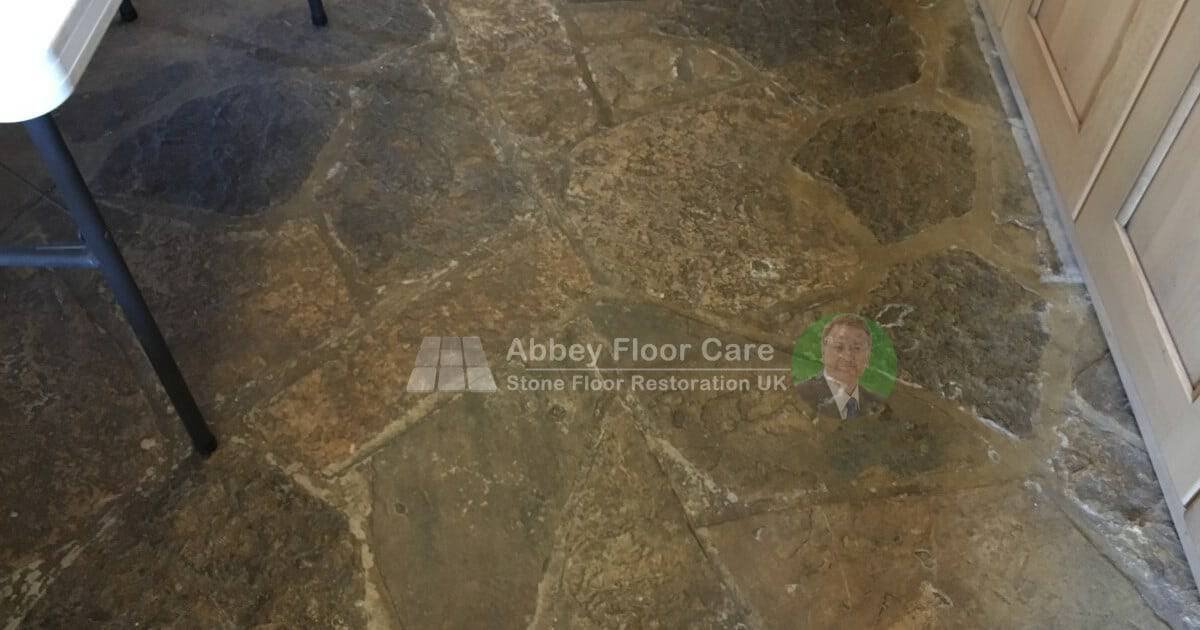
With a riven (textured) finish, dirt and grease collect in the tiny low points and creases. A standard mop tends to skim the top, so the floor can still look greyed or uneven afterwards. It is not a “you’re doing it wrong” situation — it is simply how a rough surface behaves in a busy part of the home.
At this stage, the priority was restoring cleanability and getting the floor back to an even, natural-looking finish that would be easier to live with day to day.
When old coatings are the real reason sandstone won’t clean up
The floor had been laid more than 30 years ago as part of a barn conversion, and nobody could say what had been applied to protect it over the years.
That matters because some older coatings don’t wear away evenly. They can break down into patches and leave stubborn residue that clings to dirt. The result is a floor that still appears marked even after washing.
After testing a small area, it became clear that the remaining coating needed to be lifted by careful mechanical removal, rather than trying to force it off with increasingly aggressive chemistry.
Because riven sandstone is uneven, deep cleaning can splash more than people expect. Protecting adjacent walls and flooring helps prevent accidental marking during the work.
What was involved in getting the sandstone clean again
The goal was to release ingrained dirt from a textured sandstone surface and remove most of the remaining coating so the floor could be protected evenly again.
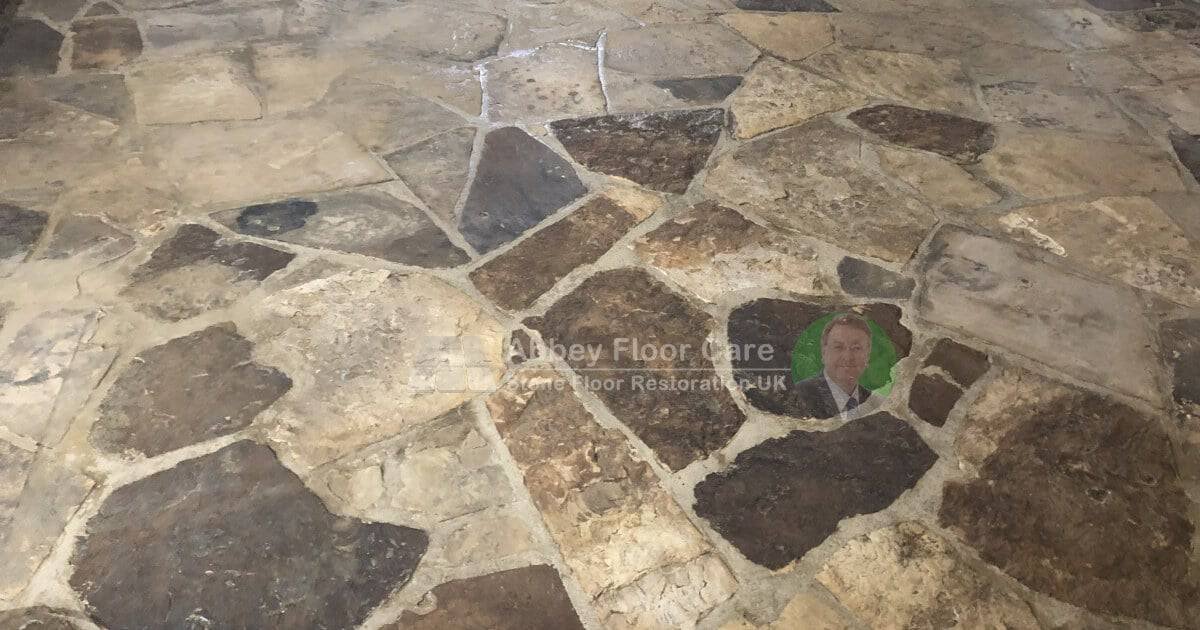
On floors like this, the “before and after” is usually less about gloss and more about the stone looking honest again — lighter, clearer, and less shadowed by dirt sitting in the texture.
Some of the mortar between the flags was already soft and slightly degraded, so a small amount of loose material was expected to appear during the clean. In this case, it was something to be aware of rather than something that changed the overall result.
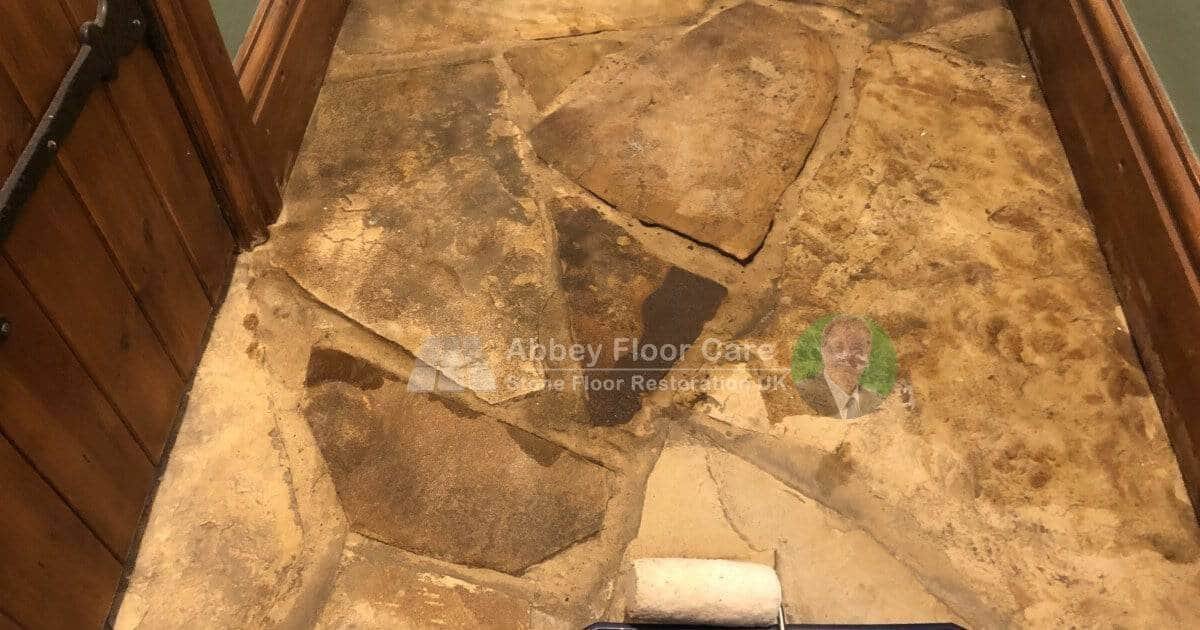
Drying is also more important than most homeowners expect with sandstone and mortar. Both are porous, so after a deep clean, the floor can hold moisture below the surface for longer than the room temperature suggests. Allowing the floor to dry properly supports a more even finish when it is resealed.
Why the sealing choice matters on rough indoor sandstone
Many sandstone floors are protected with sealers that sit within the stone (often described as impregnating sealers). These are designed to reduce absorption without leaving a visible film, so the stone keeps its natural look.
But with rough, riven sandstone, some homeowners prefer a protection approach that provides more surface-level resistance to everyday grime. The reason is practical: it can make the floor feel more manageable and reduce how quickly it looks dirty again in the textured areas.
The aim is still a natural finish—not a shiny, “plastic” look—but a surface that behaves more predictably in the working part of the home.
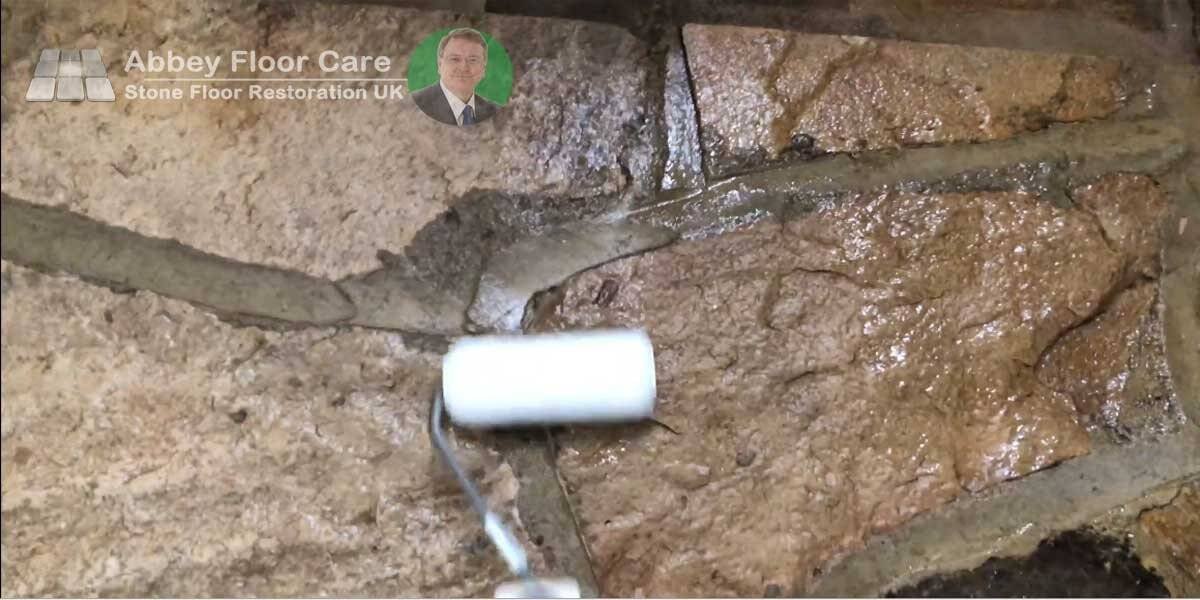
Why normal mopping often fails on riven sandstone
Textured sandstone does not behave like smooth ceramic or porcelain. A traditional mop can push dirty solution into the low points and grout lines, gradually darkening them over time. And because the surface is uneven, it can feel like you are cleaning the same floor repeatedly without getting the payoff you expect.
What is usually going on is a combination of:
- a surface texture that holds contamination,
- porous grout or mortar that can darken gradually, and
- older, patchy protection that makes the floor respond unevenly to routine cleaning.
Once the floor has been properly deep-cleaned and protected evenly again, it tends to become far less “argumentative” day to day — not perfect or smooth, but noticeably easier to keep looking clean.
When a stain has soaked into sandstone
If sandstone is under-protected or unevenly sealed, some spills can soak in and leave a darker mark. What happens next depends on what caused the stain, how long it sat, and how porous the stone is in that area.
In many cases, the realistic aim is improvement rather than miracles — lightening the mark and helping it blend so it stops being the first thing your eye lands on.
If staining keeps happening in the same general areas, it is often a sign that the floor’s protection has become patchy or worn, rather than a sign that you have “cleaned wrong”.
If you would like a broader overview of why sandstone floors can become dull, patchy, or difficult to keep clean over time, see our sandstone floor cleaning and restoration overview.
For homeowners who want more detail on which everyday cleaners are generally compatible with sandstone floors, we have a separate guide that focuses specifically on sandstone-safe cleaning products, rather than cleaning methods.

Article by: David Allen – Abbey Floor Care. Sandstone, natural stone and tile specialist with over 30 years of hands-on experience in UK homes.
David’s work focuses on how sandstone floors behave over time — why they become difficult to keep clean, how moisture and surface texture affect appearance, and why some changes are normal rather than faults. His writing helps homeowners understand what they see in their floors without sales pressure, product pushing, or technical jargon.
Recent Posts:
We work throughout the country, just some of our work counties:
Copyright © 2025 Abbey Floor Care. Tile And Natural Stone Cleaning Consultants FAQ - Privacy Policy - Terms And Conditions
Abbey Floor Care is a participant in the Amazon Services LLC Associates Programme, an affiliate advertising programme designed to provide a means for websites to earn advertising fees by linking to Amazon.co.uk. As an Amazon Associate, we earn from qualifying purchases.