Are Your Marble Tiles Properly Sealed?
Last Updated on January 18, 2026 by David
If you are disappointed with the marble sealer on your marble floors, don’t worry…
…you are not alone.
This advice about sealing marble will help you choose the right sealer for your marble floors.
Don’t Put A Surface or Topical Sealer On Polished Marble

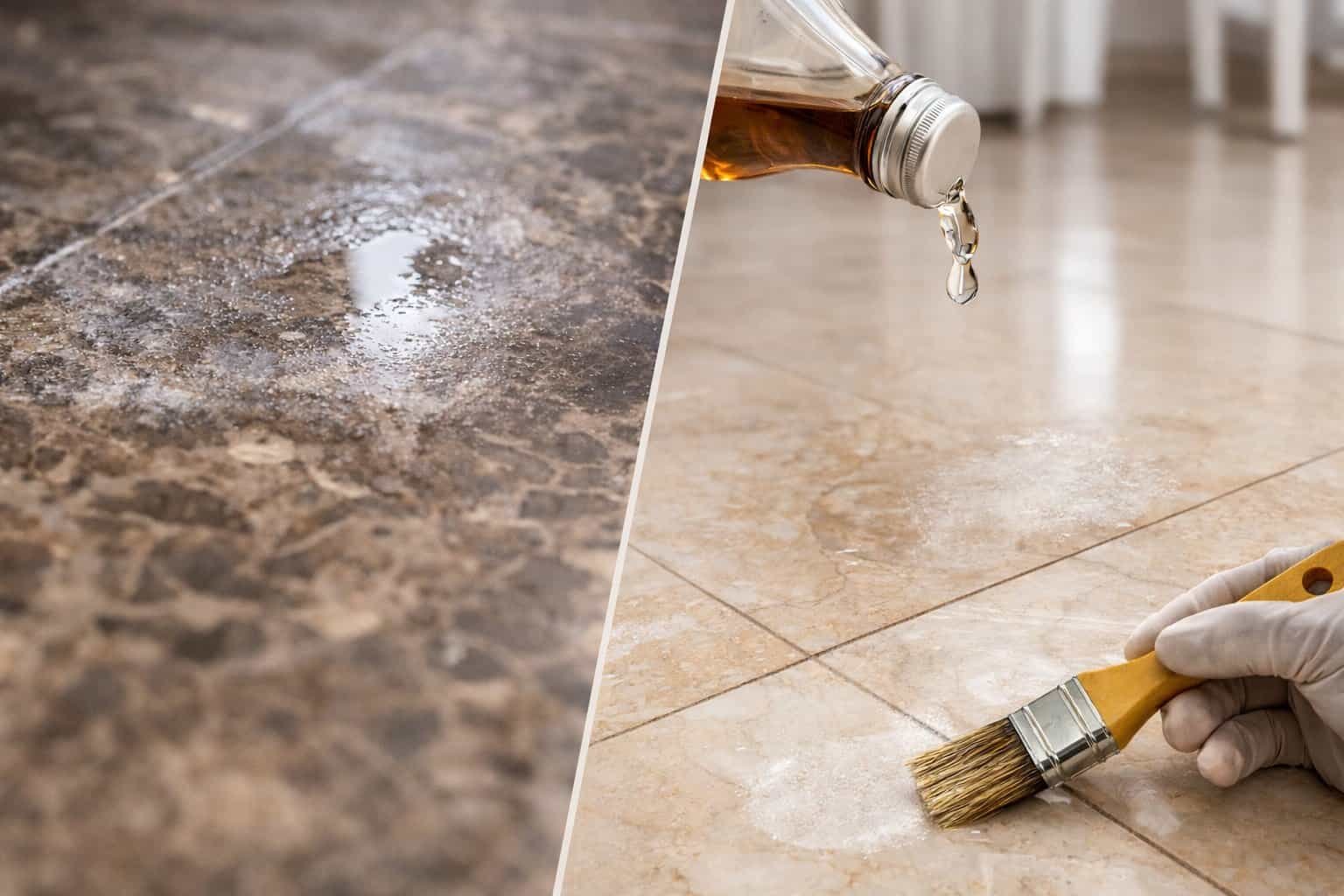
This polished marble floor was sealed with a topical (surface) sealer. On a highly polished finish, topical sealers often struggle to bond properly, so the floor can end up looking patchy and dirty.
In that situation, the fix is usually to remove the residual surface sealer and then use an impregnating sealer instead.
In most cases, though, spots and stains on marble floors are not simply the result of choosing the wrong sealer.
It is more often a matter of understanding what marble sealers can and cannot do, and making sure the floor has been sealed appropriately for its finish and day-to-day use.
What a Marble Sealer Can Do
- Help slow down water penetrating the surface
- Help slow down oil penetrating the surface
- Make routine cleaning easier and more efficient
- Help reduce water and oil soaking into the grout
What A Marble Sealer Can Not Do
- Stop a spill marking the marble if it is left on the surface
- Protect marble from acidic spills that can damage the surface
- Stop scratching from foot-borne soil and grit
- Make the marble harder or more resistant to scratching
So Why Seal Your Marble Floor Tiles
Whilst marble is quite a dense stone, it is still a porous natural stone. That means water and oil can soak in if spills are left on the surface. How quickly liquids penetrate depends a lot on the finish.
Liquids will usually penetrate a matt honed finish more quickly than a highly polished marble.
So, sealing is about giving you more time to wipe up everyday spills and making routine cleaning easier. It is not a guarantee that marble will never mark.
The kind of sealer you need depends mainly on the finish of the marble and how the floor is used and maintained.
Sealing is only one part of protecting marble, and our marble care, cleaning, repair and restoration guide shows how sealing fits into overall marble care.
Sealing Polished Marble Floors
Polished marble is normally best protected with a good quality impregnating sealer designed for dense, polished stone.
An impregnating sealer typically does not change the look or finish of the marble.
Sealing Honed Marble Floors
With honed marble you have a choice. If you want to keep the flat, matt appearance, then a penetrating impregnating sealer is usually the best fit.
If you prefer a light sheen, a topical (surface) sealer can be an option on honed marble, but it will change the appearance and needs to be maintained correctly.
Whichever marble sealer you choose, it is important to be clear about the limits: sealers are not a shield against acidic spills.
Protecting Marble Floors from Acid Etching
Marble is vulnerable to acids. Common household liquids such as vinegar, cola, lemon juice, wine, and some cleaning products can damage the surface and leave dull marks.
The safest approach is simple: wipe up spills promptly and avoid using acidic cleaners on marble.
If your marble is marking easily despite being sealed, the issue may be wear, loss of surface finish, or surface damage rather than anything a sealer can solve.
Recent Posts:
We work throughout the country, just some of our work counties:
Copyright © 2025 Abbey Floor Care. Tile And Natural Stone Cleaning Consultants FAQ - Privacy Policy - Terms And Conditions
Abbey Floor Care is a participant in the Amazon Services LLC Associates Programme, an affiliate advertising programme designed to provide a means for websites to earn advertising fees by linking to Amazon.co.uk. As an Amazon Associate, we earn from qualifying purchases.