
Restoring A Terrazzo Floor In Lickey Worcestershire
Last Updated on December 13, 2025 by David
Key Takeaways About Terrazzo Restoration In Lickey
- Older cement-matrix terrazzo floors often need complete grinding, honing and sealing, not just a deep clean, to remove embedded soil and worn binder.
- Proper repairs to holes, chips and cracks before grinding are essential so the restored surface is stable, safe and visually consistent.
- Using a densifier strengthens the cement binder, supports a higher polish and improves clarity in the marble chips.
- A colour-enhancing impregnating sealer enriches the terrazzo’s tones while keeping the surface breathable and easier to maintain.
- Calm, consistent pH-neutral maintenance and good entrance matting are what keep a restored terrazzo floor in Lickey looking bright for years.
Why This Terrazzo Floor Needed Professional Restoration
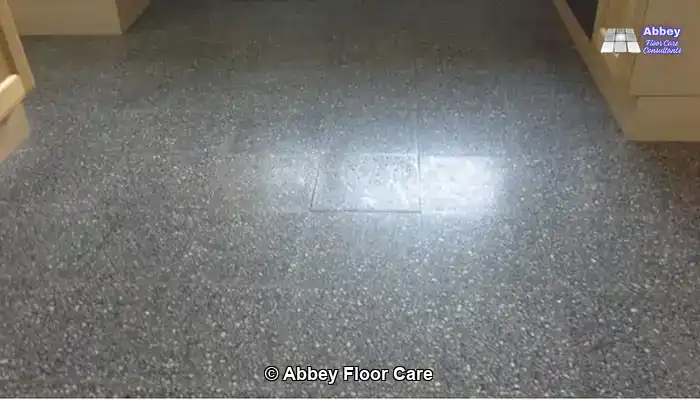
The homeowner was having a new kitchen fitted and wanted the original terrazzo floor to match the standard of the new installation. While the floor was still structurally sound, years of use had left it looking tired and inconsistent.
Across the room, there was a slight unevenness, with a mix of matte and higher-sheen patches that broke up the overall look. In places, small areas of grout and individual chips had been lost, leaving tiny holes and rough spots that caught the eye and collected dirt. A complete professional restoration was the only way to even out the surface, rebuild the damaged areas, and create a clean, consistent finish that sits comfortably alongside the new kitchen.
The homeowner was understandably nervous. Once you start grinding terrazzo, you cannot put the material back, so it is essential to respect the floor’s age, protect the original aggregate, and control every stage. This case study explains exactly what we did, and what it means for your own terrazzo if you are considering a similar restoration.
Inspection And Testing Before Any Grinding
Before bringing in heavy machinery, we carried out a detailed inspection. We checked for cracks, hollow-sounding areas and loose sections that might indicate debonding from the concrete base. We also looked for signs of moisture, such as dark patches that wouldn’t dry, and efflorescence (white salts) that sometimes appear on older floors.
This inspection matters because grinding over unstable or damp terrazzo can make problems worse. Where necessary, we mark cracks or hollow areas for repair and adjust the grinding plan, so we remove only as much material as the floor can safely withstand. In this Lickey home, the terrazzo was generally sound, but the surface was tired, porous and ready for resurfacing.
Repairing Holes, Chips And Old Fixings

The first hands-on stage was to stabilise and repair the visible damage. We opened up each hole, chip and fixing point to firm material, removing any weak or crumbly cement and cleaning out dust and debris. This gives the resin filler a solid edge to bond to, rather than sitting on top of loose material.
We then used colour-matched resin fillers, blended with chips that were similar in size and tone to the original marble aggregate. On older terrazzo, you can rarely achieve an absolutely perfect colour match because the cement binder has aged, and suppliers no longer stock the original chips. However, with careful blending and placement, you can make repairs that sit quietly in the floor rather than jumping out at you.
All repairs were left to cure fully, usually overnight. This is important because grinding too early can pull out uncured filler or cause it to sink slightly. Once cured, the repairs become part of the floor and can be ground and honed flush with the surrounding terrazzo.
Grinding Away The Worn Cement Surface

With the repairs cured, we moved on to the first grinding stages. Using a planetary grinding machine and metal-bond diamond tools, we removed the top, damaged layer of cement-matrix terrazzo. This stage does several jobs at once: it flattens minor lippage, strips away contaminated binder, and exposes clean marble chips and fresher cement below.
As we grind, the machine creates a slurry of water, cement fines and loosened soil. We continuously extract this slurry to prevent it from drying back onto the surface. After the first passes, you often see pinholes and small voids open up in the cement. This is perfectly normal. The matrix is full of micro-voids, and grinding simply reveals them.
Where necessary, we float a fine grout across the surface to fill these pinholes, then re-grind or hone to remove excess. This “grout and cut” cycle tightens the surface so it can take a consistent finish later on.
Strengthening The Terrazzo With A Densifier

Once we had removed the worst of the worn binder and achieved a flat, even surface, we treated the floor with a densifier. This is a specialist solution designed to react with the cement binder, converting some of the free lime into harder, more stable compounds.
For the homeowner, this has two main benefits. First, it strengthens the matrix so it can support a higher level of polish without the cement smearing or wearing prematurely. Second, it helps tighten the surface, making the floor slightly less absorbent and improving clarity in the marble chips. After applying the densifier, we allowed it to cure overnight so it could fully react within the binder.
Honing And Polishing To A Bright, Safe Finish

The next day, we moved from heavy grinding to resin-bond diamond honing. This is where the floor starts to look like a finished terrazzo again. Working through progressively finer grits, we removed the grinding scratches, refined the surface and developed a smooth, even sheen.
For this Lickey hallway, the client wanted a high polish, but not mirror-like, that still felt practical underfoot. We therefore took the terrazzo through a complete honing sequence and into fine polishing, checking slip resistance at each stage. On cement-matrix terrazzo, over-polishing can make a floor look spectacular but also show every scuff, so it is essential to balance appearance with day-to-day usability.
Sealing With A Colour-Enhancing Impregnator
Once the floor was honed and polished to the agreed sheen, we thoroughly rinsed and dried it, ready for sealing. Older terrazzo becomes more absorbent as the cement binder ages, so a good impregnating sealer is essential to slow down absorption and make cleaning easier.
In this case, we applied a colour-enhancing impregnating sealer. Unlike a topical coating, which sits on the surface, an impregnator penetrates the matrix and does not form a film. The colour-enhancing version deepens the tones in the cement and chips, giving the floor a richer, freshly restored look while still allowing the surface to breathe.
It is essential to understand what sealers can and cannot do. They help resist everyday spills, reduce the risk of deep staining and make mopping more effective. They do not prevent scratches, etching from acidic liquids, or all signs of wear. Good maintenance habits are still essential if you want the finish to last.
What This Restoration Meant For The Homeowner
Before we started, the hallway looked tired and patchy, with visible repairs and dark lanes that made the whole space feel drab. After the full programme of repairs, grinding, honing, polishing and sealing, the terrazzo once again looked like a feature of the home rather than a problem.
The marble chips now stand out clearly against a clean, even cement background. Old fixing holes and chips are flush and stable, and the overall sheen gives a bright, welcoming feel without being slippery. For a homeowner who was worried about irreversible damage, the most significant result is peace of mind: the floor has been restored correctly and should now give many more years of service.
Looking After A Restored Terrazzo Floor
To keep a restored terrazzo floor looking its best, simple, consistent care makes the difference. Here are the key habits we recommend:
- Use good entrance mats to reduce grit tracking in from outside.
- Vacuum or sweep regularly to prevent dry soil from scratching the surface.
- Mop with a pH-neutral stone cleaner and a microfibre mop; avoid harsh detergents.
- Wipe up spills promptly, especially acidic liquids such as wine, fruit juice, or fizzy drinks.
- Avoid abrasive pads, cream cleansers, and steam cleaners, as they can damage the binder.
- Ask for a periodic check to see when the impregnating sealer needs topping up.
Follow these steps, and you will slow down wear, keep the surface clearer and enjoy the full benefit of the restoration for much longer.
Terrazzo Restoration In Lickey And Across Worcestershire
Every terrazzo floor is slightly different. Some need only light honing and sealing, while others, like this Lickey hallway, require complete grinding, densifying, polishing and colour enhancement. What they all have in common is the need for a structured, heritage-aware approach that respects both the cement binder and the marble aggregate.
If you have a terrazzo floor in Lickey or elsewhere in Worcestershire that is dull, scratched or damaged, the safest first step is a professional assessment. You will understand precisely what is possible, what is sensible, and how to protect the character of your floor while bringing it back to life.
Frequently Asked Questions About Terrazzo Restoration In Lickey
Can Every Terrazzo Floor Be Polished To A High Shine?
Not every terrazzo floor is a good candidate for a very high gloss. The condition of the cement binder, the amount of previous wear and the level of historic repair all make a difference. Some floors look best with a refined satin or mid-sheen finish that is easier to live with day to day. Part of our survey is to explain the realistic finish options for your specific floor.
Will Grinding Make My Terrazzo Thinner Or Weaker?
Grinding does remove a thin layer of material, but on a sound slab or tile installation, it is a controlled process. We only take off enough to remove the damaged surface, flatten minor lippage and expose a clean, stable layer. On a typical domestic floor, this is measured in fractions of a millimetre per stage, not in large, structural amounts.
How Messy And Noisy Is Terrazzo Restoration?
Modern terrazzo restoration uses wet grinding with slurry extraction, minimising dust. There is some machine noise while we are working, but we use water management, sheeting and regular clean-downs to protect adjacent rooms. At the end of the job, the hallway is left clean, clear and ready to walk on once the sealer has cured.
How Long Will The Finish Last?
With sensible cleaning and the right products, a professionally restored terrazzo floor should hold its appearance for many years. High-traffic areas will show wear first, but this can often be managed with local maintenance, polishing, and resealing rather than a complete restoration. The key is to avoid harsh chemicals and abrasive tools that accelerate binder damage.
Is Terrazzo Restoration Suitable For Busy Family Homes?
Yes, provided the floor is assessed correctly and the finish is chosen with your household in mind. A mid-sheen or satin finish is often ideal for busy homes because it hides light wear better than a very glossy surface. With pH-neutral cleaning, good mats and regular dry soil removal, terrazzo can be a practical, attractive and long-lasting choice for everyday living.
Recent Posts:
We work throughout the country, just some of our work counties:
Copyright © 2025 Abbey Floor Care. Tile And Natural Stone Cleaning Consultants FAQ - Privacy Policy - Terms And Conditions
Abbey Floor Care is a participant in the Amazon Services LLC Associates Programme, an affiliate advertising programme designed to provide a means for websites to earn advertising fees by linking to Amazon.co.uk. As an Amazon Associate, we earn from qualifying purchases.