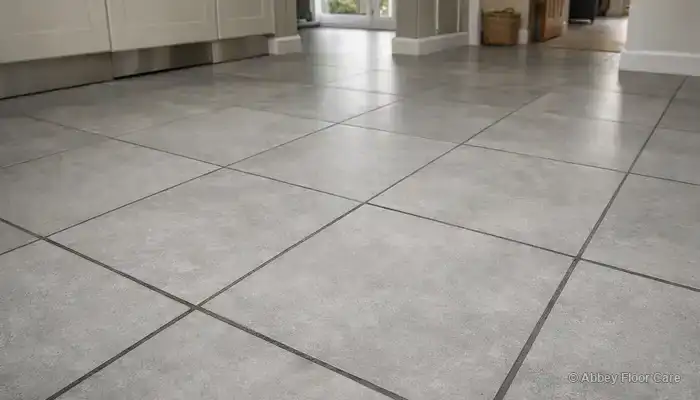
Ceramic and Porcelain Floors in Real Homes
Last Updated on February 5, 2026 by David
Ceramic and Porcelain Tile Floors: How They Behave in Real Homes
Ceramic and porcelain floors are often chosen because they’re durable, hygienic, and easy to maintain. When they don’t stay clean, it can be maddening — especially when more effort makes the floor look worse, not better. This page explains how these floors behave in real homes, what tends to change over time, and why the tiles themselves are rarely the first place to look.
This is a big-picture page. It’s here to help you recognise what you’re seeing, understand why it happens, and feel clearer about which problems are actually worth solving — before you dive into detailed advice elsewhere.
Why ceramic and porcelain floors can become harder to live with over time
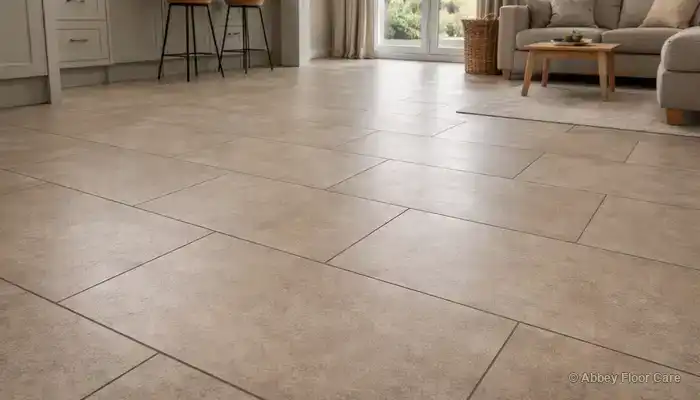
This appearance reflects surface behaviour changing over time, not failure of the tile itself.
Ceramic and porcelain tiles are generally stable materials. They don’t absorb spills like natural stone can, and they rarely fail internally. What changes is what sits on top of them, and what sits between them.
Over time, fine residues from everyday cleaning can build up in thin layers. Dirt can become held in surface texture. Grout can darken, stain, or look patchy. None of this is dramatic in isolation, but together it leads to a familiar outcome: a floor that looks dull, streaky, uneven, or permanently slightly dirty.
Detailed pages exist that focus specifically on ceramic and porcelain tile care and cleaning behaviour, but the key point here is understanding *why* routine effort can stop delivering visible results.
Ceramic and porcelain don’t age in the same way
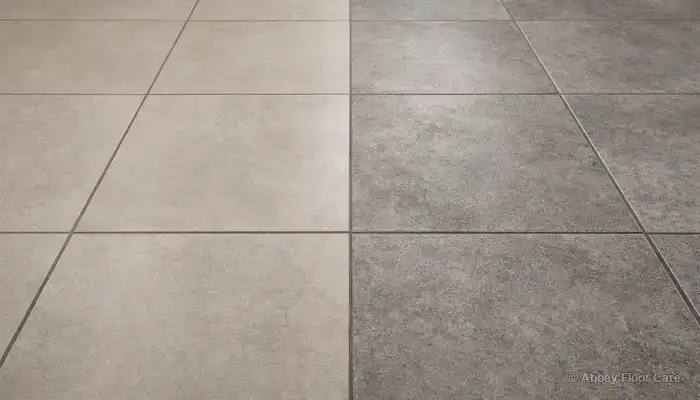
Surface finish determines how soil and residue interact with the tile, even when the material itself remains sound.
Ceramic and porcelain are often grouped together, but they don’t behave or age in the same way.
Ceramic tiles usually have a factory-applied glaze. Even matte ceramics tend to have a defined surface layer that should not be altered or “refinished”. When ceramic floors disappoint, it’s rarely because the tile surface itself has changed.
Porcelain tiles are dense through the body, but their behaviour depends heavily on the surface finish. Smooth porcelain is often forgiving. Textured or anti-slip porcelain can hold soil and residue far more easily. Polished porcelain can lose clarity when thin films build up over time.
There are separate pages that go deeper into specific porcelain surface behaviours and finish limitations, but this distinction is the foundation everything else builds on.
Why grout has such a big impact on how the whole floor looks
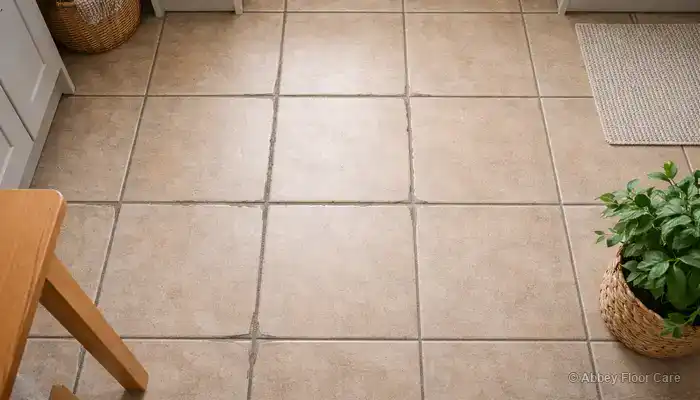
Grout changes independently of the tiles and often dictates how the entire floor is perceived.
Grout behaves very differently from tile. It’s porous and absorbent, and it changes faster than the surrounding surface. That makes it far more vulnerable to staining, patchiness, and uneven colour.
This is why grout so often pulls the eye and dominates the room. Even when tiles are clean, dark or blotchy grout can make the entire floor feel tired or unclean. If you’ve focused on the tiles and still felt disappointed, grout is usually the missing part of the picture.
Grout-specific problems are handled separately on pages dealing with grout condition, repair, and renewal, because they follow different rules from tile surfaces.
Care, cleaning, sealing, restoration, and repair are not the same thing
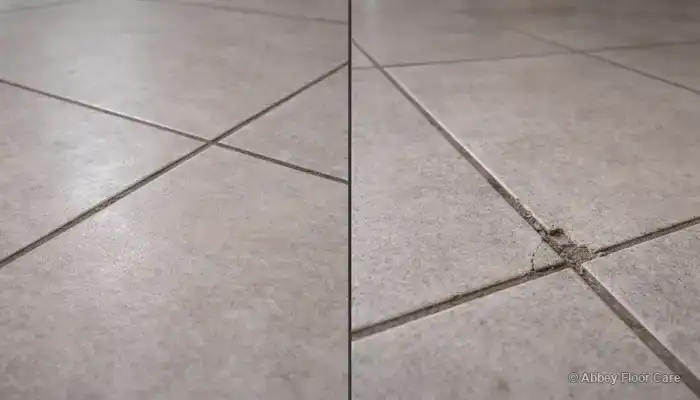
Surface behaviour and physical damage are different conditions and belong to different response categories.
These terms are often used interchangeably, but they describe very different states and responses. Confusion here is one of the main reasons floors become frustrating.
- Care relates to day-to-day habits that help a stable floor stay predictable.
- Cleaning addresses soil and residue that build up gradually over time.
- Sealing usually applies to porous elements such as grout, not coating tile surfaces by default.
- Restoration becomes relevant when routine cleaning no longer resets the appearance.
- Repair deals with physical defects such as missing grout, cracked joints, or damaged tiles.
Each of these categories has its own expectations and limits. Pages that deal with sealing behaviour, restoration scenarios, or repair considerations exist separately so this page can stay focused on orientation rather than instruction.
What a floor looks like when it’s behaving normally
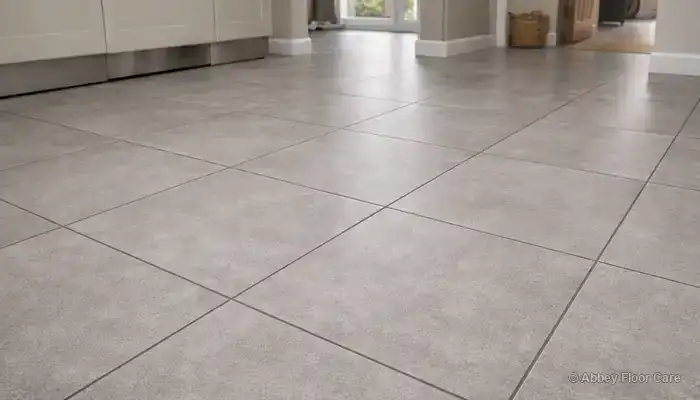
This is the reference state a stable ceramic or porcelain floor naturally returns to.
A floor in a stable state tends to look even and predictable. Cleaning doesn’t leave smears behind. Grout colour stays consistent. The surface doesn’t feel coated or sticky, and marks don’t immediately reappear.
These aren’t perfection standards. They’re simply signals that the floor is responding normally again.
What this page is here to do
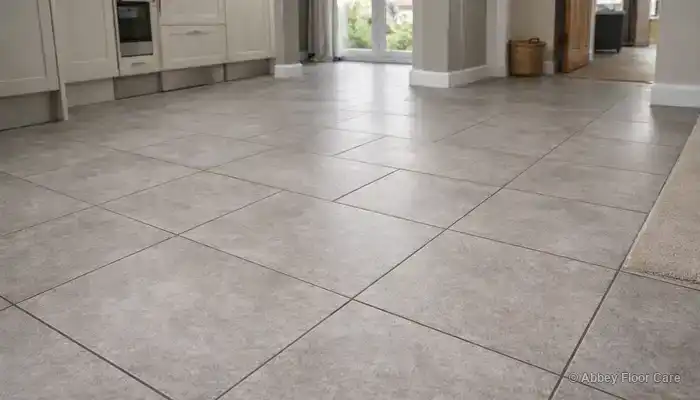
Real homes reveal how ceramic and porcelain floors behave beyond showroom conditions.
If your ceramic or porcelain floor never quite looks clean, you’re not alone — and it doesn’t mean you chose the wrong tiles or failed to care for them properly. In most cases, the frustration comes from surface behaviour, grout changes, and residue layering, not from damage.
This page exists to explain that behaviour in plain English. More detailed guidance — covering cleaning limits, sealing decisions, restoration thresholds, and repair scenarios — lives on separate pages so those topics can be handled properly without turning this into a set of instructions.
When the gap between expectation and behaviour is understood, everything else becomes easier to judge.
Recent Posts:
We work throughout the country, just some of our work counties:
Copyright © 2025 Abbey Floor Care. Tile And Natural Stone Cleaning Consultants FAQ - Privacy Policy - Terms And Conditions
Abbey Floor Care is a participant in the Amazon Services LLC Associates Programme, an affiliate advertising programme designed to provide a means for websites to earn advertising fees by linking to Amazon.co.uk. As an Amazon Associate, we earn from qualifying purchases.