Limestone Honing and Repair: Expert Techniques
Last Updated on January 24, 2026 by David
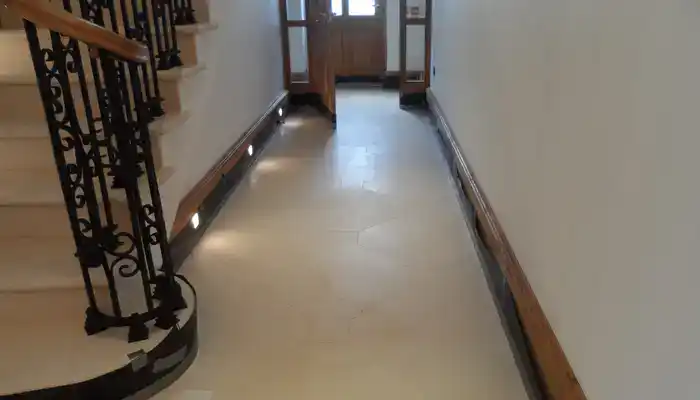
Limestone honing and repair is a careful way of dealing with worn or damaged limestone when cleaning no longer gives good results. It focuses on correcting the condition of the surface so the stone behaves normally again, rather than changing its appearance or creating a new finish.
What Homeowners Usually Notice First
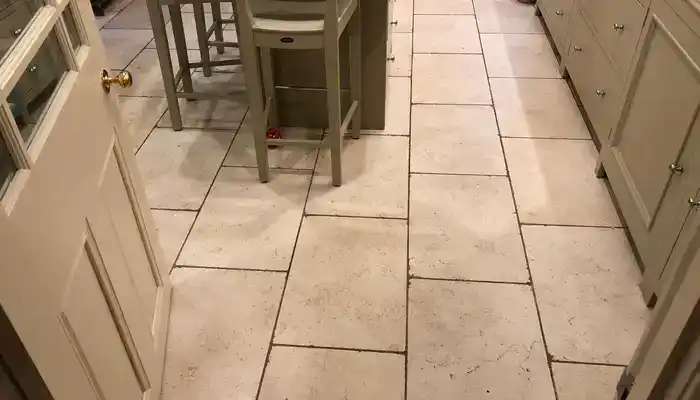
Many homeowners find that their limestone never quite looks right, even with regular care. The surface may look dull or uneven, with some areas marking quickly while others seem impossible to keep clean.
You may also notice light scratches, soft etching, or patches that feel slightly different underfoot. These are often early signs that the surface of the limestone has started to break down.
Why Limestone Starts to Look Tired
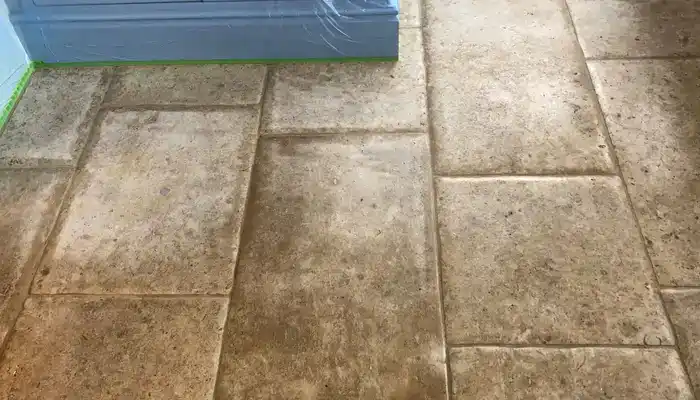
Limestone is a naturally porous stone, and its surface is softer than many people realise. Over time, foot traffic, moisture, and unsuitable cleaning products can wear away the very top layer of the stone.
Once this happens, dirt and moisture are absorbed unevenly. At that point, cleaning stops working, because the problem sits within the surface rather than on top of it.
What Honing Is Meant to Correct
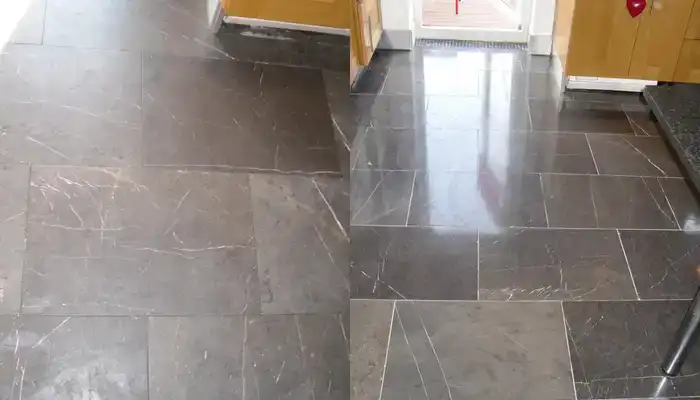
Honing is used to gently remove this weakened surface layer in a controlled way. By doing so, it exposes a healthier layer of limestone underneath that responds more evenly to cleaning and everyday use.
The purpose is not to make the stone shiny or alter its natural character, but to restore a smooth, consistent surface that behaves as limestone should.
See how honing and polishing work together on a domestic floor, this case study shows the outcome on a limestone kitchen floor: example of honing and polishing on a real kitchen floor.
How Repair Fits Into the Picture
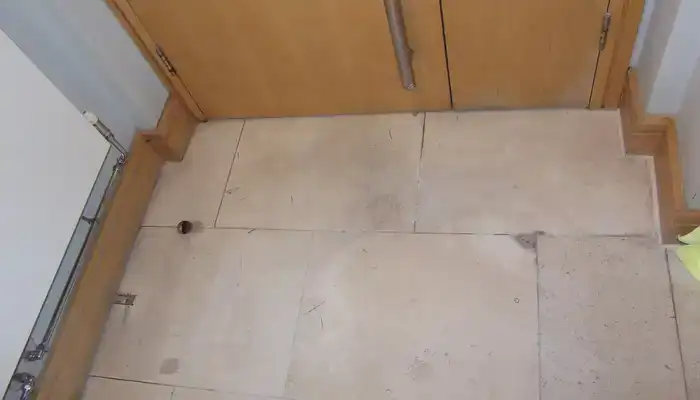
Repair focuses on local damage such as small chips, cracks, or broken edges that interrupt the surface. These areas often allow moisture and dirt to penetrate more deeply, which can cause surrounding sections to deteriorate faster.
Stabilising these weak points helps the limestone act as one continuous surface again, rather than a mix of sound and fragile areas.
Why Stronger Cleaning Rarely Solves the Problem
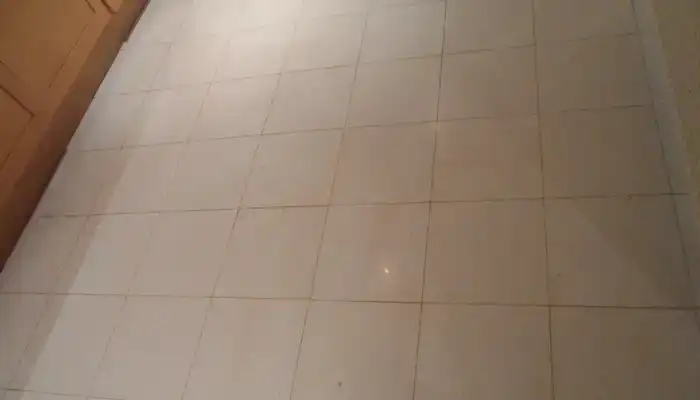
It is very common to assume that dull or marked limestone simply needs deeper cleaning or more frequent sealing. Unfortunately, this often makes matters worse.
Aggressive products can further weaken the surface, while sealing an unstable layer may trap residues below the surface. This is why limestone sometimes looks worse after well-intended attempts to protect it.
Where Sealing Comes In
Sealing only becomes useful once the limestone surface has been properly stabilised through honing and any necessary repair. At that stage, sealing can help control absorption and make routine care easier.
Sealing cannot compensate for surface damage. It works best when applied to stone that is already behaving consistently.
When Honing and Repair Are the Right Approach
Honing and repair are appropriate when limestone looks tired, uneven, or marked because the surface layer has worn down, but the stone itself is still fundamentally sound.
If problems extend beyond surface condition into wider aesthetic or structural concerns, this goes beyond the scope of honing and repair alone. In those situations, homeowners should refer to Limestone Floor Restoration Best Practices for broader guidance.
Recent Posts:
We work throughout the country, just some of our work counties:
Copyright © 2025 Abbey Floor Care. Tile And Natural Stone Cleaning Consultants FAQ - Privacy Policy - Terms And Conditions
Abbey Floor Care is a participant in the Amazon Services LLC Associates Programme, an affiliate advertising programme designed to provide a means for websites to earn advertising fees by linking to Amazon.co.uk. As an Amazon Associate, we earn from qualifying purchases.