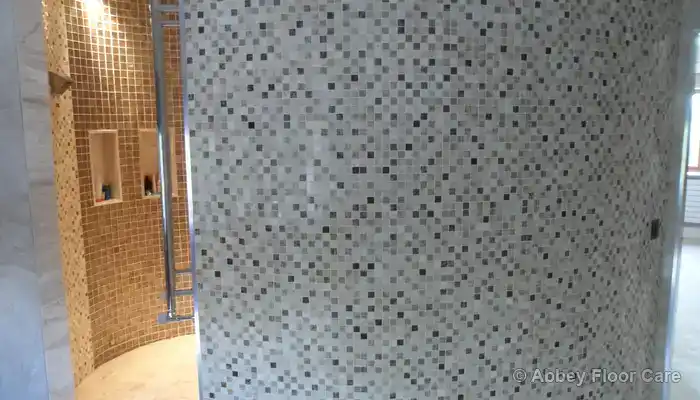
Are Your Marble Shower Walls Dull And Grimy
Last Updated on January 27, 2026 by David
Are you having difficulty cleaning your marble shower walls?
If your shower walls have started to look dull, patchy, or as though they are never quite clean, this page explains why that happens with marble in a shower environment — and what surface protection is actually trying to manage (and what it cannot change).
The Problem With Marble As A Shower Wall
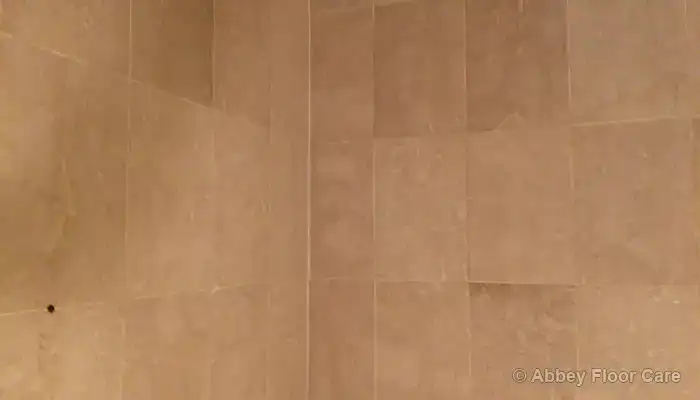
Marble (and other calcium-based stones such as limestone or travertine) reacts to everyday shower conditions in a way many homeowners do not expect. Soaps, shampoos, and conditioners often contain acidic ingredients. Acid reacts with the calcium in marble, subtly altering the surface and leaving it slightly roughened. When that happens, light reflects unevenly and the stone starts to look dull.
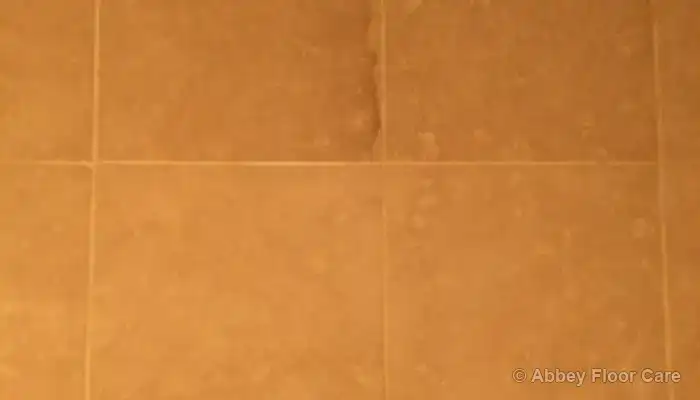
This is why marble shower walls can lose their crisp appearance even when limescale and visible residues are being cleaned away.
Another factor that often surprises homeowners is how warm water behaves around marble. As water heats up, it becomes slightly more acidic. On its own, this change is mild, but in a shower, it is repeated day after day, compounded by steam, condensation, and toiletries’ residues. For a calcium-based stone like marble, this creates conditions in which the surface can be gradually altered, even without obvious spills or neglect.
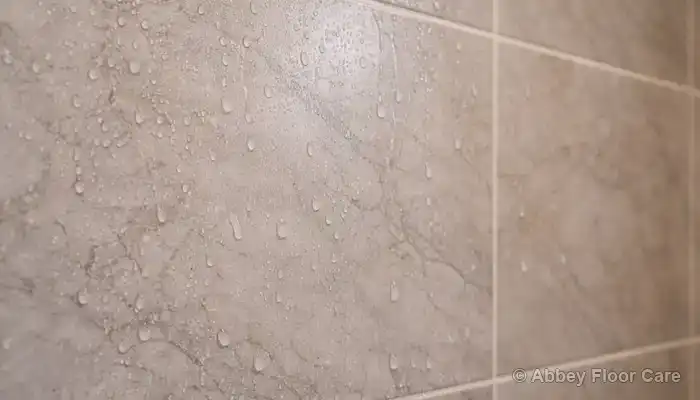
This helps explain why marble shower walls can lose clarity faster than marble used elsewhere in the home. There is no foot traffic and very little abrasion on the wall surface. Instead, the dullness develops through repeated chemical interaction with warm, slightly acidic moisture rather than physical wear.

To help reduce everyday absorption, marble shower walls are often treated with an impregnating sealer. This can slow moisture penetration, but it does not prevent acidic exposure from altering the stone’s surface. Over time, dull patches can still appear.
The Solution – Marble Wax
One approach sometimes used on marble shower walls is a marble wax. The idea is not to change the stone itself, but to create a very thin, sacrificial surface film. That film focuses first on the day-to-day impact of water and toiletries, rather than on the marble surface being directly exposed.
A waxed surface can also encourage water to shed more easily. When water does not sit on the stone for as long, it can reduce how quickly the surface appears tired or patchy. This is similar to how a waxed surface elsewhere allows water to bead and run off rather than spreading out.
It is important to understand the limits of this approach. A wax film does not reverse etching, repair the marble, or restore a worn surface. It simply manages how the surface behaves and how quickly visible dulling returns.
Like other protective treatments, wax is not permanent. It wears away over time and needs periodic refreshing. Many homeowners still find it useful for managing the persistent “never quite looks clean” problem that marble shower walls can develop.
Once the marble surface has been altered in a shower setting, routine cleaning often fails to make a visible difference. Cleaning removes surface residues, but it cannot undo subtle chemical changes within the marble itself. When light no longer reflects evenly, the stone can remain dull no matter how carefully it is cleaned.
For a broader explanation of how marble behaves, and how protection, cleaning, and restoration fit together, see our marble care, cleaning, repair and restoration guide.

Article by: David Allen – Abbey Floor Care
David is a UK natural stone specialist with over 30 years’ experience working with marble in domestic settings.
His focus here is explaining how marble behaves in shower environments, why surfaces can become dull or patchy over time, and how topical protection is sometimes used to manage visible wear on marble shower walls.
Recent Posts:
We work throughout the country, just some of our work counties:
Copyright © 2025 Abbey Floor Care. Tile And Natural Stone Cleaning Consultants FAQ - Privacy Policy - Terms And Conditions
Abbey Floor Care is a participant in the Amazon Services LLC Associates Programme, an affiliate advertising programme designed to provide a means for websites to earn advertising fees by linking to Amazon.co.uk. As an Amazon Associate, we earn from qualifying purchases.