
Terracotta Floor Polishing Services: Transform Your Home
Last Updated on January 19, 2026 by David
Benefits of terracotta floor polishing services
Enhanced aesthetics
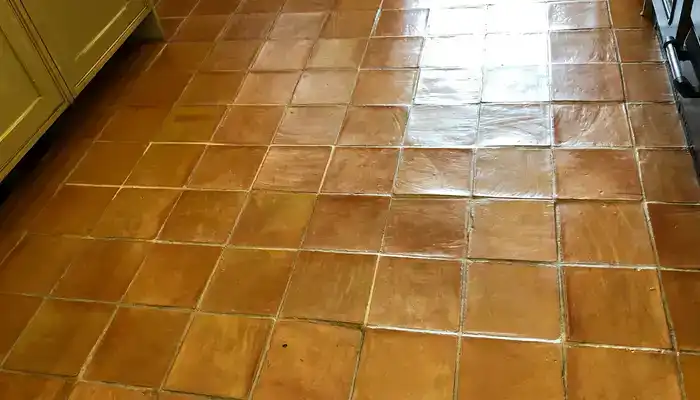
A well-polished terracotta floor should look warmer, cleaner, and more even, without losing the character that made you choose terracotta in the first place. If your floor has gone dull, patchy, sticky, or slightly yellowed, that’s often a sign the old finish has broken down or built up in layers, rather than the tiles being “worn out”.
A specialist polishing service is about restoring a tidy, consistent look that suits period and character homes. The aim is a finish that looks cared for, not plastic, and that stays easier to live with day to day.
Increased durability
Professional polishing is most successful when it’s treated as a proper terracotta service, not a quick “shine-up”. Terracotta is naturally very porous, so once the sealer or finish starts failing, the tiles can absorb soil and spills much faster.
Done correctly, the work supports the protective system on the floor and helps reduce rapid re-soiling. The durability comes from thorough preparation, controlled drying, and choosing a suitable breathable protection system for terracotta, not from aggressive abrasion.
Improved hygiene
When terracotta has old coatings and residue on it, dirt can cling to the surface and sit in the pores and grout lines. After professional restoration and polishing, regular cleaning is usually simpler because the surface is more consistent and less grabby.
If you want a simple, homeowner-friendly routine for keeping terracotta looking cleaner for longer (without harsh chemicals), see: how to stop terracotta getting dirty fast.
Choosing the right polishing service
Experience and expertise
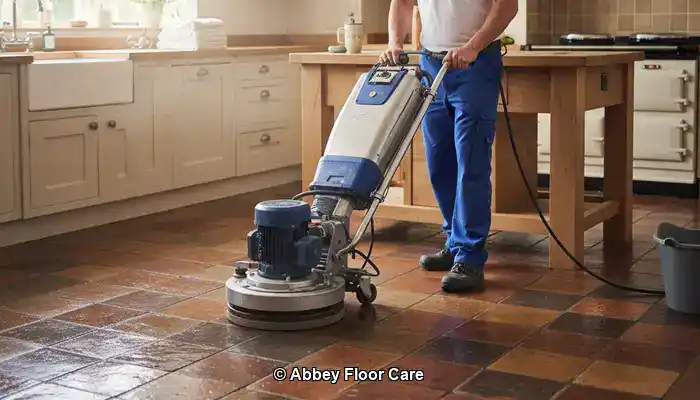
Terracotta is soft and highly absorbent, so the wrong approach can make problems worse. Look for a provider who is comfortable explaining how they handle old coatings (waxes or acrylic build-up), deep soil in the pores, and drying time before any protection is applied.
A good terracotta specialist will also talk you through finish options in plain terms, including how to avoid a result that looks too dark, too shiny, or patchy.
Customer reviews
Reviews are useful when they describe outcomes that matter for terracotta: whether sticky areas were resolved, whether colour became more even, whether grout lines cleaned up well, and whether the finish stayed stable after it was put back into use.
If possible, prioritise reviews that mention older homes and lived-in spaces like kitchens and hallways, where terracotta gets tested the most.
Service guarantees
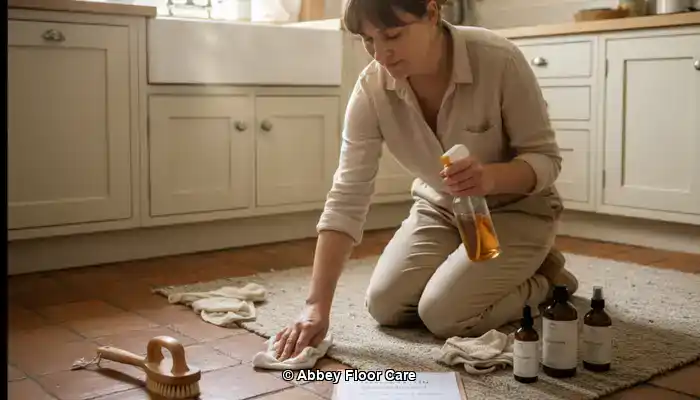
A clear guarantee matters because terracotta results depend on correct preparation and realistic expectations. Before booking, check what is included: inspection, test patches (especially if colour enhancement is being considered), any repairs, drying time, and what support you get if something doesn’t look right once the floor is back in normal use.
Preparation for polishing
Cleaning the surface
For terracotta, preparation is the job. If there are layers of old wax, acrylic coatings, or sticky residue, these need removing fully before any “polishing” work makes sense. Otherwise, you can end up sealing in contamination and getting patchiness again.
A specialist service should focus on thorough removal of build-up, careful agitation (without abrasion that scars soft clay), and proper extraction so loosened soil isn’t pushed back into the pores.
Repairing damages
Chips, cracks, and missing edges should be addressed before the finish is rebuilt. Repairs need to be compatible with terracotta and fully dry before sealing. This helps the final look stay more even and reduces weak spots where moisture and dirt can get back in.
Protecting furniture
Clear access makes the work cleaner and safer. Removing smaller items, lifting rugs, and protecting nearby surfaces helps the team work methodically and avoids dragging furniture across areas that are mid-process. If heavy pieces can’t be moved, a good provider will explain how they’ll protect them and work around them without cutting corners.
The polishing process
Initial preparation and surface refinement
With terracotta, “polishing” is not the same as marble-style grinding. Terracotta is too soft for conventional honing, and excessive abrasion can open the clay body and increase porosity.
In most cases, the correct route is controlled cleaning and coating removal, then gentle surface refinement only where needed to create a clean, uniform base ready for protection. If any more intensive mechanical work is suggested, it should be explained carefully and justified for your specific floor.
Rebuilding the finish (the part you see)
Once the floor is properly clean and fully dry, the finish is rebuilt using a suitable sealing system. This is where the final look comes from: natural and matte, subtly enhanced, or a more obvious satin sheen.
A careful service will explain the trade-offs clearly, use test areas if enhancement is being considered, and apply thin, even coats rather than trying to “get the shine” by over-applying product.
Final buffing
Buffing is used to even out the finish and improve how it looks and feels underfoot. The goal is a consistent result that suits terracotta, not a plastic-looking surface. Done properly, the floor should be easier to keep looking presentable and less likely to grab dirt.
Aftercare and maintenance
Regular cleaning
Terracotta stays looking better when cleaning is gentle and consistent. Dry sweeping or vacuuming (with a suitable setting) removes grit that can act like sandpaper. For damp cleaning, a pH-neutral cleaner that’s compatible with the finish is usually the safest approach.
Avoid steam mops and harsh acidic or highly alkaline products, which can shorten the life of the sealer or cause a topical finish to look tired faster.
Pro Tip: After polishing and sealing, stick to gentle, pH-neutral cleaning to protect the finish.
These are optional household items some homeowners use for routine cleaning. The key is not the brand — it’s keeping your cleaning gentle and compatible with the finish on your terracotta.

Fila Pro Floor Cleaner
|

HG Terracotta Clean & Shine 1Ltr P86
|

Vileda H2PrO Spin Mop System
|
Avoiding scratches
Felt pads under furniture and good entrance mats make a bigger difference than most people expect. Terracotta is soft, and grit in busy areas is one of the quickest routes to a tired-looking surface.
Periodic re-polishing
How often you need a refresh depends on traffic and the finish type. A sensible service will talk about maintenance in terms of expected wear and planned renewal, rather than promising a finish that stays perfect forever.
Immediate spill response
Blot spills promptly rather than rubbing. Terracotta can absorb quickly once protection is compromised, and even sealed floors benefit from quick attention, especially with oils and strongly coloured liquids.
Annual inspections
A quick annual check helps you catch early signs of wear (especially in traffic lanes) before the floor becomes difficult to manage again. Small top-ups at the right time are usually easier than letting the finish fail fully.
Cost considerations
Size of the area
Larger areas take longer to clean, dry, and finish properly. With terracotta, drying time is often as important as hands-on time, especially on older floors where moisture movement can be part of the story.
Condition of the floor
Floors with heavy build-up, deep soil in the pores, or patchy old coatings usually need more preparation. If there are repairs to handle (chips, loose tiles, crumbling edges), those are best addressed before sealing so the end result is more stable and more even.
Service provider rates
Rates vary, but the real difference is often in the process: whether the provider properly removes build-up, neutralises and extracts residues, and allows adequate drying before sealing. Cutting corners on terracotta tends to show up later as patchiness, stickiness, or rapid re-soiling.
FAQs
What is terracotta floor polishing?
For terracotta, polishing usually means restoring the surface finish: removing old coatings and ingrained residue, refining the surface gently where needed, then rebuilding protection with a suitable sealer system. The aim is a cleaner, more even look that’s easier to maintain.
How often should I polish my terracotta floor?
It depends on traffic and the finish used. A refresh is usually needed when the surface starts to look tired in traffic lanes, becomes harder to clean, or begins absorbing spills more quickly.
Can I polish terracotta floors myself?
DIY is possible, but terracotta is easy to damage with the wrong chemistry or abrasion, and it’s also easy to trap moisture by sealing too soon. If your floor is sticky, patchy, or has layers of old wax or acrylic, a specialist is usually the safer route.
How do I choose a polishing service?
Choose a provider who can explain how they handle old coating removal, drying time, and finish choices for terracotta. Look for evidence they treat terracotta differently from ceramic or stone, and that they use test patches where colour change is a risk.
What should I do if my terracotta floor gets scratched?
Minor scuffs may be improved with maintenance and careful cleaning, but deeper scratches can indicate the protective finish is wearing thin. A specialist can advise whether a localised repair, a top-up, or a broader refresh is the right next step.
How long does the polishing process take?
It depends on size, condition, and drying time. Terracotta often needs a controlled drying period after deep cleaning before sealing can be applied safely.
What is the cost of terracotta floor polishing?
Costs are driven by size, how much build-up or deep contamination needs removing, whether repairs are needed, and the protection system chosen. A reliable quote should be based on inspection rather than guesswork.
Can polished terracotta floors be sealed?
Yes. Sealing is usually the key part of the finished result because terracotta is so porous. The most suitable option depends on the look you want (natural, subtly enhanced, or a more satin finish) and how the space is used.
How do I maintain my polished terracotta floor?
Use gentle, compatible cleaning methods, deal with spills promptly, protect against grit and furniture scuffs, and plan periodic refreshes before the finish fails fully. For wider terracotta care context (cleaning, sealing, repair, restoration), see: Terracotta Floor Care: Cleaning, Sealing, Repair and Restoration Explained.
Request Your Terracotta Polishing Assessment
If your terracotta floor is dull, patchy, or difficult to keep clean, contact us and we’ll explain the safest way to restore it.
9 Hazel Avenue
Lenzie
Glasgow
G66 4RR
07533-873-476
Copyright © Abbey Floor Care.
We are proud to be your local stone floor cleaning, polishing, and restoration specialists for homes and commercial properties in Central Scotland.
With years of experience working with all types of stone floors, our friendly and professional stone floor cleaning services can’t be beaten on price or service.
FAQ - Privacy Policy - Terms And Conditions
Abbey Floor Care is a participant in the Amazon Services LLC Associates Programme, an affiliate advertising programme designed to provide a means for websites to earn advertising fees by linking to Amazon.co.uk. As an Amazon Associate, we earn from qualifying purchases.