Restoring the Shine to Terrazzo Floors: What It Really Involves
Last Updated on January 21, 2026 by David
Restoring the Shine to Terrazzo Floors: What Professional Restoration Really Delivers
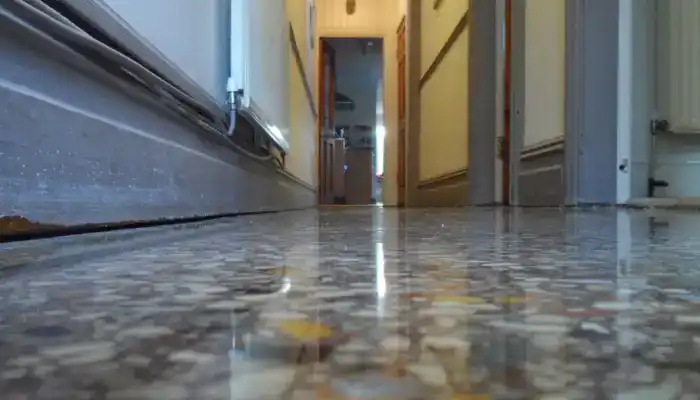
When a terrazzo floor goes dull, scratched, patchy or stained, “getting the shine back” is rarely about a quick polish. In most UK homes, domestic terrazzo is a cement-matrix floor with marble chips set into a Portland cement binder. Over time, that binder can become more porous and absorbent, which is why dull traffic lanes and stubborn discolouration can persist even after a thorough clean. A proper shine restoration is a staged process: assess the condition, remove what’s failed or contaminated, mechanically refine the surface, then protect it so the finish lasts.
What a Restored Terrazzo Finish Should Look and Feel Like

A successful restoration doesn’t just “make it shiny”. It restores clarity: clean-looking marble chips, more even colour in the cement matrix, and a consistent level of sheen (matt, satin, mid-sheen, or polished) that suits the home. This matters in period and character properties, where terrazzo is often a feature material you want to preserve, not gamble with. It’s also worth setting expectations: sealers do not prevent etching or scratching, and older binder may retain some permanent discolouration. The goal is a sound, refined surface with a finish you can maintain safely.
What Causes Dullness, Scratches, and Patchy Shine in Domestic Terrazzo
Most disappointing “results” come from treating a structural surface problem like a simple cleaning problem. Dullness that remains after cleaning is a common signal that the surface is worn, etched, scratched, or contaminated within a softened binder. Long-term use of strong alkaline cleaners can quietly increase cement porosity, allowing soil and residue to embed deeper. Waxes and detergent-heavy products can also build up in the matrix and leave a persistent grey, muted appearance.
If you want safe day-to-day cleaning and product selection guidance without risking the binder, use a dedicated product guidance page rather than experimenting on a heritage floor: What Is the Best Product for Terrazzo Cleaning.
Pro Tip: Example items some homeowners use for routine terrazzo cleaning (not for “shine restoration”)
These links are here for routine cleaning only and do not replace an assessment-led restoration plan. For terrazzo, the safe principle is simple: pH-neutral cleaning, gentle tools, and no abrasives. Avoid acidic cleaners (they can etch marble chips), avoid strong alkalis (they can weaken the cement binder over time), avoid scouring pads, and avoid “shine restorer” films that can trap soil and leave the floor duller.


Durability and Wear: What Restoration Can (and Can’t) Change
Mechanical resurfacing can remove a damaged top layer and create a fresh finish-ready surface, which is why it can resolve embedded soil, patchy dullness and many scratches. What it can’t do is stop normal wear forever. Polished finishes show wear more quickly than honed or satin finishes, especially in hallways and kitchens. The long-term look is determined as much by maintenance habits as by the restoration itself: grit control, gentle tools, and the right cleaner category matter.
Safety: Understanding Sheen, Slip Risk, and Practical Finish Choice
A higher sheen is not automatically “better”. In a busy home, a honed or satin finish often makes more sense because it hides minor wear and stays looking consistent for longer. Where slip risk is a concern, the right finish level and the right aftercare are part of the decision, not an afterthought. A careful specialist will talk you through finish options based on the condition of the floor, the location, and how the space is used.
Choosing the Right Specialist for Terrazzo Shine Restoration
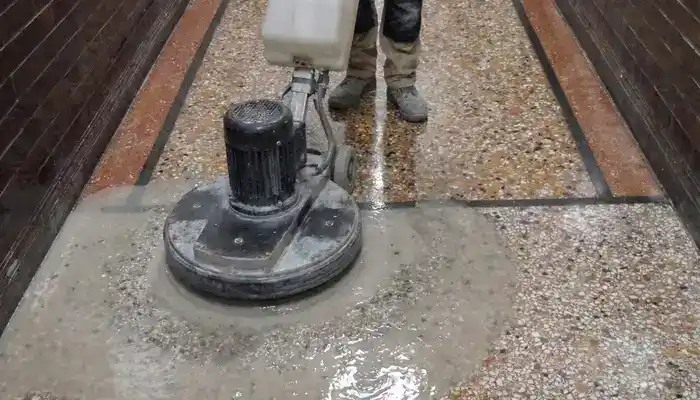
Terrazzo restoration is irreversible work. The right choice is a specialist who understands cement-matrix terrazzo, marble-chip sensitivity, and how to manage binder degradation. A general cleaner can make a worn terrazzo floor worse by using harsh chemicals, abrasion, or “shine” products that create residue and trap soil. You want someone who assesses first, explains the sequence clearly, and is honest about what will and won’t improve.
Experience That Matches Your Floor Type
Domestic terrazzo can be a monolithic slab (often older properties) or terrazzo tiles (more common from the 1960s onwards). Tile terrazzo carries extra risks such as lippage (uneven edges), movement, and joint problems. A proper assessment should identify the terrazzo type and the real reason the floor looks tired: etching, scratches, embedded soil, coatings, adhesive staining, or structural defects.
Methods That Protect the Material (and Your Home)
Look for a process that is condition-led and controlled: slurry extraction between stages, careful edge work, and a plan for protecting adjacent surfaces. Done properly, terrazzo restoration is methodical rather than aggressive. The aim is to remove only what must be removed to create a sound, even surface and the finish you’ve agreed.
Evidence of Care, Cleanliness, and Respect for the Property
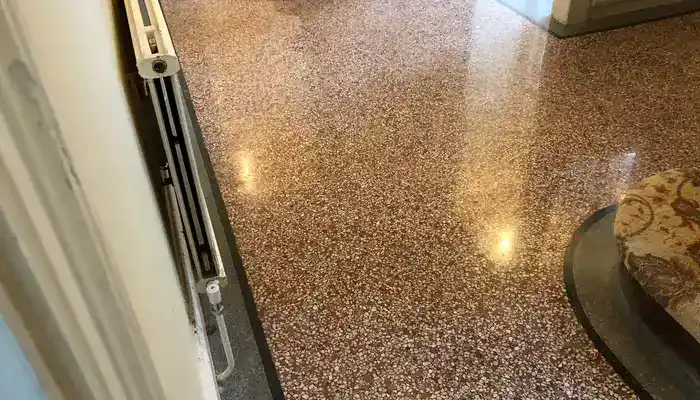
Reviews are most helpful when they mention practical realities: communication, protection of the home, dust/slurry control, and whether the finished floor matched the agreed sheen level. For a heritage-minded homeowner, the key question is simple: does this contractor talk about preservation and process control, or do they sell “quick shine” solutions?
Preparing Your Home for Terrazzo Restoration
Preparation isn’t complicated, but it matters. Clearing the area gives the specialist access to do the work evenly and safely. It also helps you and the contractor have a proper conversation about any risks: weak edges, cracked areas, hollow-sounding patches, lippage, adhesive staining from old coverings, and any moisture-related dark patches.
Clear the Space and Flag Known Problem Areas
Move furniture and rugs, and point out where the floor is most disappointing: dull traffic lanes, scratches, dark patches, and any areas that sound hollow or feel uneven. A good restoration plan starts with identifying what’s cosmetic versus what indicates binder breakdown or movement.
What “Clean First” Actually Means
Cleaning is often the first stage, but it has a purpose: removing surface contamination and revealing the true condition before mechanical resurfacing. Cleaning cannot remove etching, scratches, lippage, or embedded soil in a softened binder. If the floor still looks tired after deep cleaning, that is useful information—it’s telling you the shine loss is structural, not superficial.
Scheduling Without Disruption Claims
Plan access and airflow, and agree in advance how the work area will be protected and how slurry will be managed. The exact practicalities depend on the floor size, the finish level, and what the assessment finds, so avoid anyone who promises a one-size-fits-all timetable without seeing the floor properly.
Understanding the Restoration Stages (High-Level, Condition-Led)
Shine restoration follows a logical sequence. The exact abrasives and number of stages vary, but the order matters. Skipping stages or “polishing over problems” is how terrazzo ends up looking patchy again.
1) Assessment and Test Area
This identifies terrazzo type, binder condition, coatings or residues, and whether there are defects that must be stabilised first. It also helps set the right finish expectation: honed/satin versus polished, and what the floor can realistically achieve.
2) Repairs Before Resurfacing (Where Needed)
Cracks, holes, gripper damage, and service channels are dealt with before grinding or honing so the surface can be refined as one coherent plane. Repairs are normally colour-matched resin fills (often with blended chips), with the honest caveat that perfect matches are not always possible in older floors.

3) Grinding and Honing: Creating a New Surface
Grinding removes the worn or contaminated top layer and helps flatten unevenness (including lippage in tiled terrazzo). Honing then refines the surface by removing grinding scratches and tightening the finish. During these stages, pinholes and micro-voids can be revealed and filled as needed to create a smoother, more uniform result.
4) Optional Polishing and Finish Choice
Polishing is optional and chosen for higher sheen, not as a default. Some floors also benefit from densification to support a brighter finish. The right specialist will explain the trade-off: higher sheen can look superb, but it shows wear more readily and demands more disciplined maintenance.
5) Sealing: Protection, Not Armour
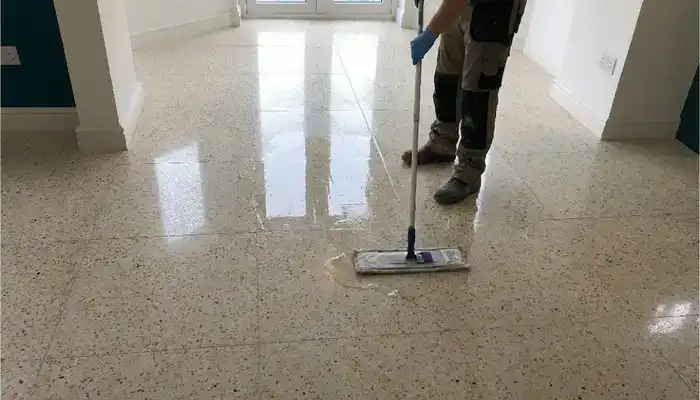
Sealing manages absorption in the cement binder and makes routine cleaning easier. It does not prevent etching from acids, and it won’t stop scratching from grit. The point is to slow staining, buy time to wipe spills, and stabilise how the floor behaves day to day.
Aftercare: Keeping the Restored Shine Without Risk
The maintenance rules are simple, but they’re non-negotiable if you want the finish to last. Remove dry grit often (it behaves like sandpaper underfoot), use a pH-neutral cleaner category, and avoid harsh chemicals, abrasives, steam cleaning, and “shine restorer” films that can trap soil and create long-term dullness. If water starts absorbing rapidly or the floor looks dull again straight after cleaning, treat that as a sign to reassess—don’t escalate chemicals or scrubbing.
Cost Considerations (Decision Support Only)
Costs vary because the work varies. The biggest drivers are usually floor condition and scope: how much surface damage must be removed, whether lippage needs flattening, how many repairs are required, and what finish level you’re aiming for. When comparing quotes, focus on what the contractor believes is causing the dullness and what stages they propose to resolve it. If the explanation is vague or skips straight to “a polish”, that’s a warning sign on a heritage terrazzo floor.
Frequently Asked Questions About Terrazzo Shine Restoration
Is “polishing” the same as restoring the shine?
Not always. If the surface is worn, etched, scratched, uneven, or contaminated within a porous binder, true shine restoration usually involves grinding and honing first, then optional polishing, then sealing. A simple polish may improve appearance temporarily, but it won’t correct structural dullness.
How do I know if cleaning will be enough?
If the floor still looks dull, patchy, or marked after a proper deep clean, that typically indicates wear, etching, scratches, embedded soil, or residue within a softened binder. Cleaning can remove dirt and films, but it cannot remove damage in the surface layer.
Can a sealer stop future dullness and staining?
A sealer helps manage absorption and makes routine cleaning easier, but it does not prevent etching or scratching. Long-term appearance depends on grit control, gentle cleaning, and avoiding harsh chemicals and abrasive tools.
Will cracks and repairs disappear after restoration?
Repairs can blend much better after honing and finishing, but older terrazzo often cannot be made visually perfect. Some hairline cracks are too fine to fill and may be left, and any crack that re-opens suggests ongoing movement that needs honest assessment.
Is the process messy?
Professional terrazzo restoration should be controlled and planned. Expect protective measures, slurry management, and clear communication about how adjacent surfaces will be protected. If a contractor is casual about containment and clean-up, take that as a risk signal.
Where does this page fit in the wider terrazzo guidance?
This guide focuses specifically on restoring shine: when it’s needed, what the stages mean, and how to maintain the finish afterwards. For a broader overview of domestic terrazzo care, polishing, restoration and related topics, see: Terrazzo Floors in UK Homes: Care, Polishing & Restoration Explained.
If you’re unsure whether cleaning, polishing, or full restoration is appropriate for your floor, you can use our contact form to request a professional assessment and understand the options before deciding. Contact Abbey Floor Care
Written by David Allen — Stone & Tile Restoration Specialist (25+ years’ experience)
Recent Posts:
We work throughout the country, just some of our work counties:
Copyright © 2025 Abbey Floor Care. Tile And Natural Stone Cleaning Consultants FAQ - Privacy Policy - Terms And Conditions
Abbey Floor Care is a participant in the Amazon Services LLC Associates Programme, an affiliate advertising programme designed to provide a means for websites to earn advertising fees by linking to Amazon.co.uk. As an Amazon Associate, we earn from qualifying purchases.