Cleaning Sealing And Repairing Travertine In Chinnor Oxfordshire
Last Updated on January 31, 2026 by David
Repairing Cracked and Worn Travertine Flooring in a Chinnor Home
Travertine floors often change slowly. At first, it might just feel harder to keep clean, or certain areas start to look a little darker than the rest. Over time, those small changes can turn into more obvious concerns, such as cracking or open holes that no longer feel like part of the stone’s natural character.
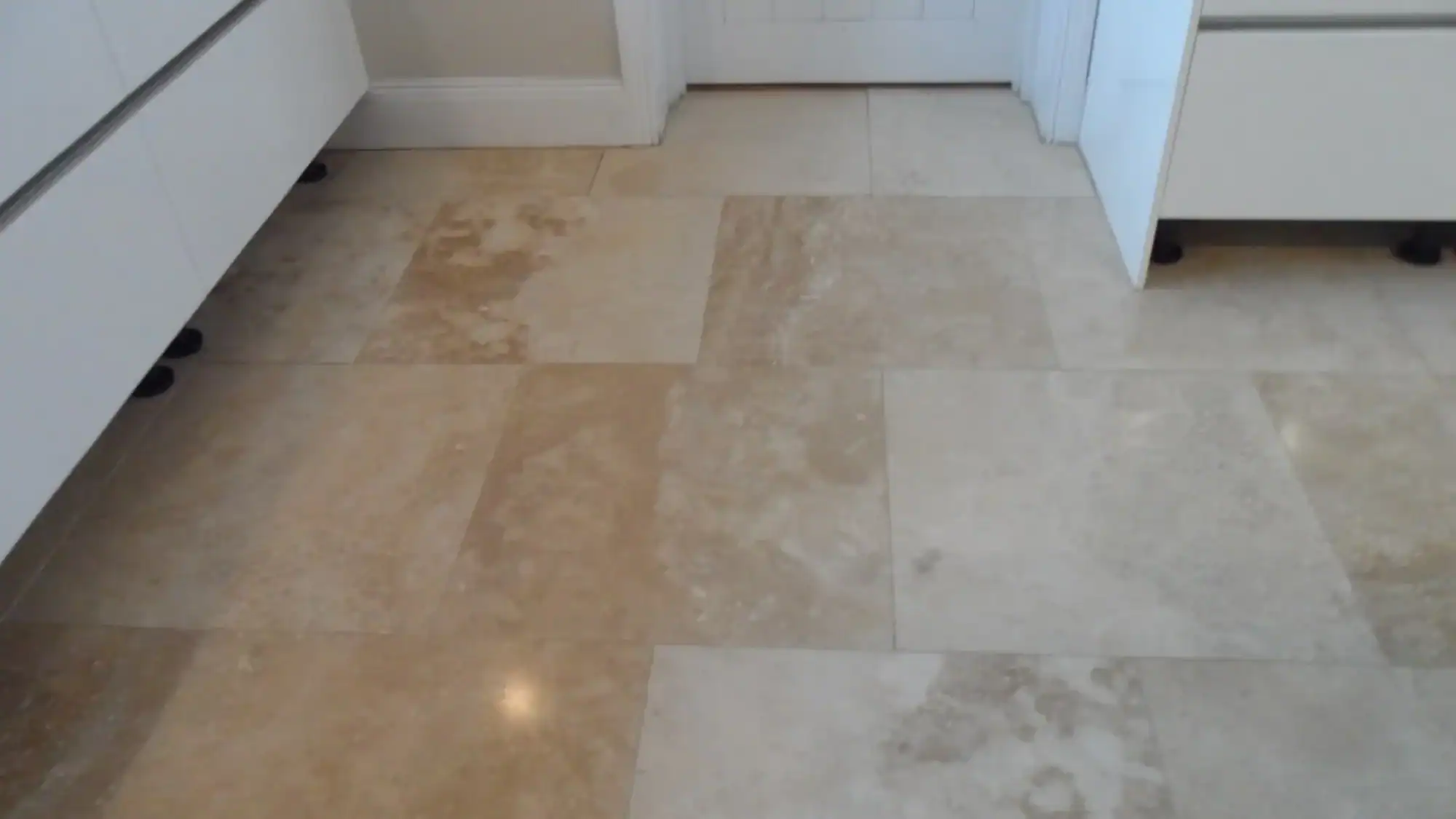
That was the situation in this Chinnor home. The floor showed several clear signs that something wasn’t behaving as it should: two cracked tiles, a worn surface finish, and multiple open voids that were collecting dirt and visually standing out.
When cracking suggests something deeper is going on
The most noticeable issue was the cracked tiles. Spare tiles were available, so it made sense to replace them before inspecting the rest of the floor. Once the surrounding grout was carefully removed, it became clear that the cracking wasn’t just a surface problem.
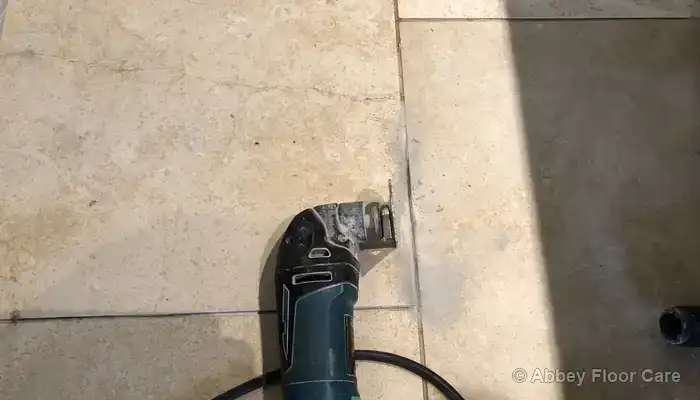
This floor was laid over water-based underfloor heating. Once the damaged tiles were lifted, part of the original screed beneath was found to be soft and unstable — something that would allow movement over time and help explain why cracking had developed.
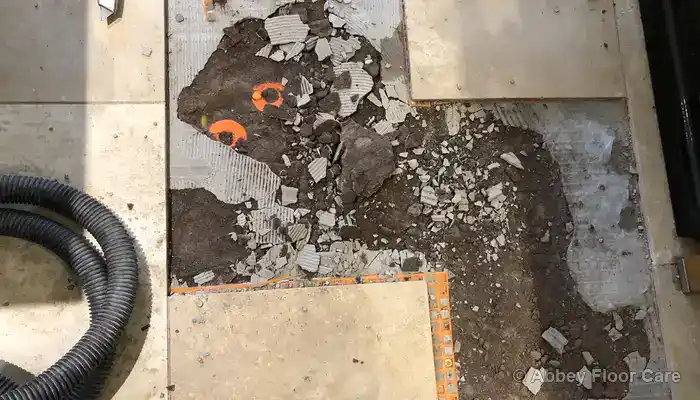
Why did the floor need stabilising before anything else
Before replacement tiles could be fitted, the underlying subfloor needed to be made sound. Any weakness below the surface would simply pass movement back into the stone above, leading to further problems later on.
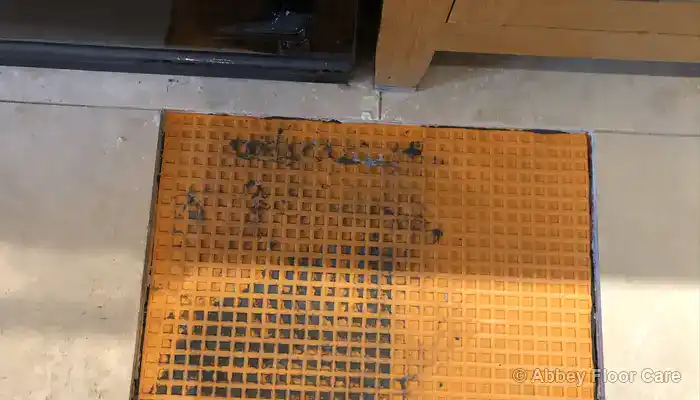
Once the base was stable again, the two new travertine tiles were installed and levelled with the surrounding floor to blend into the surface.
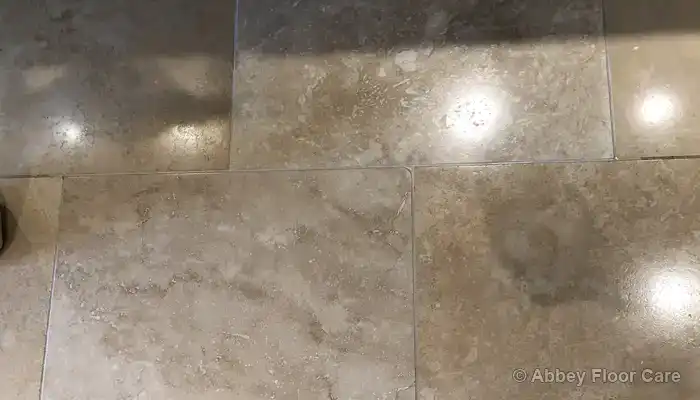
When natural holes stop feeling like part of the stone
Around the rest of the floor, several natural holes had opened up where the thin surface layer of the travertine had broken down. While these voids are part of how travertine forms, once they open up they tend to trap dirt and make the floor look permanently grubby, no matter how often it’s cleaned.
These areas needed stabilising so the surface could behave more consistently and feel easier to live with day to day.
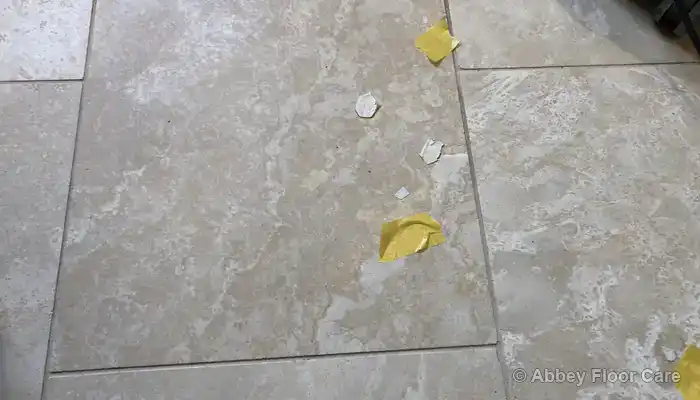
The finished appearance and what changed
Once the repairs were complete, the floor was cleaned and sealed to restore clarity and achieve a more even, manageable finish. The aim was not to remove all natural variation, but to calm the floor visually and prevent further deterioration.
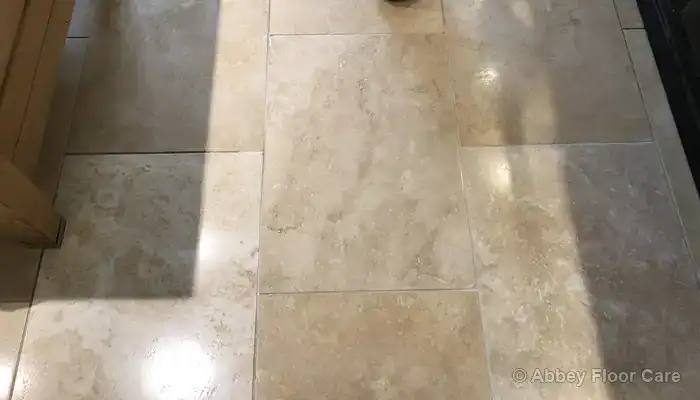
Aftercare notes
For this flooring, the homeowner was recommended to use a suitable maintenance cleaner to protect the sealer finish and to keep an eye on spots with more foot traffic. When signs of wear start to show, those areas can be touched up to maintain a uniform appearance.
If you’re unsure what’s safe to use when cleaning a travertine floor day-to-day, our guide to travertine-safe cleaners and sealers highlights which products won’t damage the stone and which to avoid.

Case study recorded by: David Allen – Abbey Floor Care
Natural stone and tile restoration specialist with over 30 years of hands-on experience working in UK homes.
David documents real restoration projects so homeowners can see what was happening to the stone, why particular problems developed, and how the finished floor behaved once those issues were put right. This page documents a completed travertine floor repair in a Chinnor home.
Recent Posts:
We work throughout the country, just some of our work counties:
Copyright © 2025 Abbey Floor Care. Tile And Natural Stone Cleaning Consultants FAQ - Privacy Policy - Terms And Conditions
Abbey Floor Care is a participant in the Amazon Services LLC Associates Programme, an affiliate advertising programme designed to provide a means for websites to earn advertising fees by linking to Amazon.co.uk. As an Amazon Associate, we earn from qualifying purchases.