Pitted Travertine Cleaning Reading Berkshire – Abbey Floor Care
Last Updated on February 2, 2026 by David
Is your travertine floor dirty and difficult to clean, even when you mop it regularly?
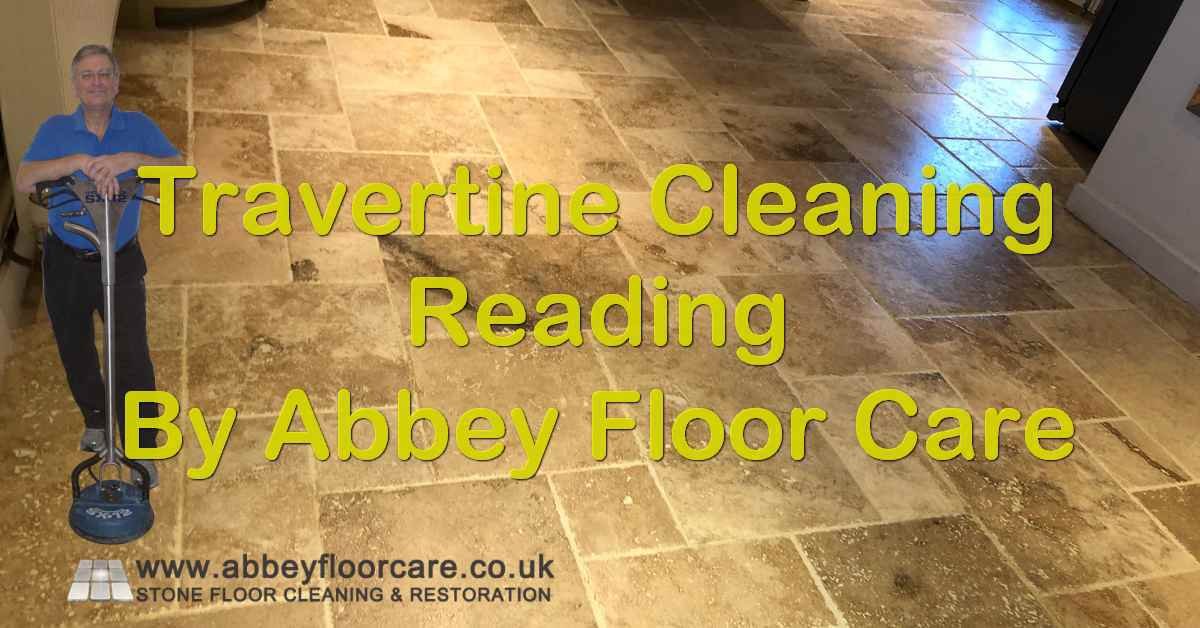
This pitted Travertine Floor Cleaning Reading project shows what was done on one real domestic floor where the holes and pits had filled with ingrained dirt.
This project took place in Silchester, near Reading, Berkshire, and covered a kitchen, hallway, WC, and washroom.
If you need help with your floors, use our simple contact form.
On This Page
- Why Travertine Can Be Difficult to Keep Clean
- The Advantages Of Calling A Travertine Cleaning Service For Reading
- Preparing The Work Area
- Cleaning The Travertine Flooring
- Filling The Holes In Travertine Tiles
- Travertine Floor Sealing Pros And Cons
- Sealing This Travertine Floor
- Travertine Floor Maintenance Tips
Why Travertine Can Be Difficult to Keep Clean
Travertine is a popular stone used as tile on floors and walls throughout the home, especially in kitchens, bathrooms, showers, and wet rooms.
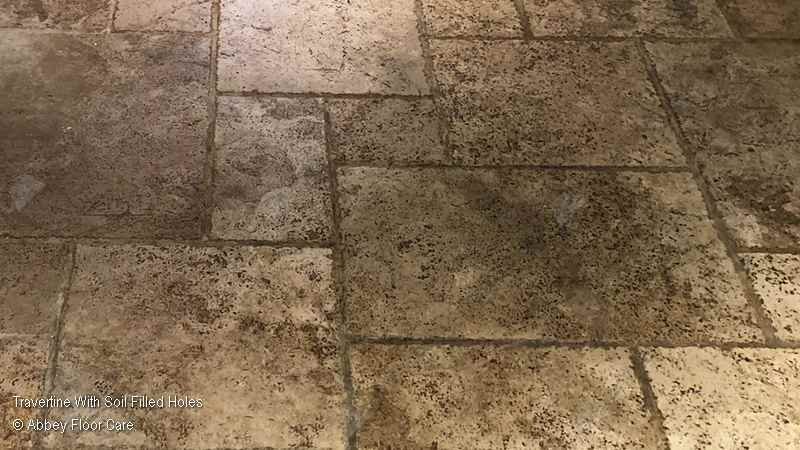
This floor space is a kitchen, hallway, WC, and washroom. This stone floor looked unsightly because the holes and pits in the tile surface had filled with dirt.
The surface was dirty with dried-in mopping slurry marks. Unlike ceramic tile, travertine is porous, and its surface can retain residue and soil in the pits.
They had to scrub the floor on their hands and knees, but they could not remove the ingrained dirt from the travertine tiles. The floor would quickly go dark again.
So my client was looking for a specialist travertine cleaning service.
The Advantages Of Calling A Travertine Cleaning Service For Reading
They were seeking a consultation with a reputable cleaning service provider.
After a brief online search, they recognised the quality of our work and contacted us.
Looking at photos of the floor, I could see that the surface was very dirty and in need of renovation.
The homeowner had used mopping with various cleaning products and even steam cleaning.
I explained that harsh chemicals and steam cleaning can damage any floor sealer, making the surface harder to keep clean.
For this floor, the aim was to perform a deep clean and seal to restore the colour and remove dirt from the holes.
Then fill the holes and pits to prevent them from refilling with dirt.
Then apply an appropriate travertine sealer.
Preparing The Work Area
Tumbled travertine tile has a rough surface, and a scrubber will cause splashing.
So I started the renovation by installing plastic sheeting on the doors, walls, and kitchen units.
I also used low-tack masking tape to prevent the protective adhesive from lifting loose paint from the skirting boards and the painted kitchen units. I used a dry vacuum cleaner to remove dry dirt and grit.
Cleaning The Travertine Flooring
Travertine is a form of limestone composed of calcium carbonate, deposited by mineral springs, especially hot springs.
Because it is made of calcium, travertine should not be cleaned with acid-based cleaners, as they dissolve the calcium carbonate in limestone and travertine.
While travertine is a rock, it is softer than granite, sandstone, or flagstone and scratches easily, so the cleaning process should be gentle.
I applied a strong alkaline travertine cleaner and sealer remover to the floors, allowing the product time to soften any remaining sealer and soil residues.

After about 20 minutes, I used a rotary scrubber with a medium-grade polypropylene brush to loosen the dirt.
I had to use my pressure rinsing equipment to clean the holes in the stone.
I repeated the scrubbing and pressure rinsing, then got on my hands and knees to remove the final residue.
Filling The Holes In Travertine Tiles
Our restoration process effectively removes soil from holes in travertine tiles.
It also removes any loose filler that will come away in the coming months.
So the next stage of the refurbishment is to fill the holes in the travertine tiles.

We used a high-quality Jasmine colour filler.
The next day, the filler had set sufficiently for me to use a scrubbing pad to clean and rinse the floor, ready for sealing.
Travertine Floor Sealing Pros And Cons
Our Business offers a range of travertine sealing options for travertine and similar tiles, such as slate and Terracotta.
Giving a matt, satin or gloss finish.
We discussed the pros and cons of applying the different sealers, considering the customer was working from home.
Impregnating Sealers
- Offers good oil and water resistance
- No resistance to acid etching
- Damaged by strong cleaning chemicals
- Sealing takes around 4 hours
- The sealer then needs around 1 hour to cure, ready for light traffic
Topical Sealer
- Offers good oil and water resistance, blocking the passage of fluids through the surface.
- Provides a high-sheen finish without mechanical polishing or buffing.
- Good durability, limited resistance to acid etching
- Weakened by strong cleaning chemicals and bleach.
- Sealing takes around 6 hours
- The sealer then takes around 1 hour to cure, ready for light foot traffic
Sealing This Travertine Floor
After discussing the options with the customer, we selected a topical, durable, satin-finish film-forming sealer.
The sealer offers the perfect balance of ease of application and minimal disruption.
To achieve optimal results, I first applied an impregnating sealant.
Then I applied 4 coats of a satin-finish topical sealer, allowing an hour between coats for each layer to dry.

The sealer serves as a sacrificial wear layer, protecting the travertine surface from traffic wear and tracked-in grit.
The sealer also gives more time to wipe spills before they damage the floor.
Importantly, the sealer makes the floor much easier to clean.
My client was delighted with the finish, commenting several times on how beautiful the floor looked.
Travertine Floor Maintenance Tips
High-alkaline cleaners damage most stone sealers.
So it is important to use a pH-neutral, non-acidic cleaner for floor care.
These are the products discussed with the homeowner for this specific pitted travertine floor project, following cleaning, filling, and sealing, rather than general maintenance recommendations.

LTP Floorshine
|

LTP MPG Sealer H20
|

Vileda H2PrO Spin Mop System
|
If you have a travertine floor, clean up a spill as soon as possible; leaving it longer increases the likelihood that the stain will penetrate the sealer and discolour the stone.
For example, if you leave a red wine spill on the tile, it will permeate the tile and create a lasting, unsightly stain.
Sealers protect your tiles from staining and enhance their appearance; however, the sealer will wear down over time.
This is when dirt can become ingrained in the tile’s pores, and pits can begin to darken again.
To keep your stone floor looking its best, ensure there is always a good coat of sealer.
This project is one of many examples referenced in our Travertine care and restoration guide, which explains how travertine behaves in real homes and why particular issues develop over time.
If you have a stone floor in Silchester, Reading, Berkshire or the surrounding area that you need help with, please drop me a line.
I’ll be happy to help.
Recent Posts:
We work throughout the country, just some of our work counties:
Copyright © 2025 Abbey Floor Care. Tile And Natural Stone Cleaning Consultants FAQ - Privacy Policy - Terms And Conditions
Abbey Floor Care is a participant in the Amazon Services LLC Associates Programme, an affiliate advertising programme designed to provide a means for websites to earn advertising fees by linking to Amazon.co.uk. As an Amazon Associate, we earn from qualifying purchases.