How to Fill Holes in Travertine Floor Tiles for Under £20
Last Updated on March 2, 2026 by David
Are you looking for a simple, cheap travertine repair kit to fill holes appearing in your beautiful Travertine Floor?
This article will show you how to get an easy to use repair kit for travertine for under £20, that will last you for years to come.
Before we start, it is worth understanding why holes appear and more importantly why they will continue to appear.
Part of the Travertine Flooring Guide
This repair guide sits within our full Travertine Flooring Care, Cleaning, Repair and Restoration Explained resource — covering everything from why holes appear to professional restoration options.
Why Holes Keep Appearing in Travertine Floor Tiles
Natural travertine is full of holes, caused by gas bubbles trapped in the stone when it first formed, leaving the stone sponge-like, with a honeycomb structure.
If you look at the underside of the tile you will see the natural holes in the stone.

Back face of a filled travertine tile

The front face of a filled travertine tile
When the stone is processed into floor tiles, the holes on the facing surface of the tile are filled before smoothing and polishing. That is why the tiles are called filled travertine.
Holes appear in filled travertine tiles for two reasons: a hole just below the surface is exposed when the thin layer of stone above it is damaged, or filler in an existing hole breaks down. Because the honeycomb structure extends throughout the tile, this is an ongoing process — new holes will continue to appear as the floor ages and traffic wears the surface. A repair kit is not a one-off purchase; it is a long-term household tool.
The problem with holes is that they fill with dirt, making your floor look ugly.

Sanded Grout vs Resin Filler: Which Travertine Repair Kit Should You Use?
There are two approaches to filling travertine holes: sanded grout and two-part resin filler. For most homeowners, sanded grout is the better choice. The table below explains why.
| Attribute | Sanded Grout | Two-Part Resin |
|---|---|---|
| Cost | Under £20 | £25–£60+ |
| Smell | None | Strong chemical odour |
| Finishing Method | Damp cloth wipe | Grinding machine or scraping |
| Skill Level | Beginner | Intermediate to professional |
| Drying Time | Overnight | 5–30 minutes to set |
| DIY Suitability | High | Low — better for professionals |
We recommend homeowners use sanded grout because it is cheaper, easier to finish flush, produces excellent results, and requires no specialist tools. Resin fillers are best left to professional restorers.
Step-by-Step: How to Fill Travertine Holes With Sanded Grout
You will need the following items, all available for under £20:
- 5kg bag Mapei Keracolour FF, available here (pick colour 130 – Jasmine) £6.20
- Some water or 1 litre bottle of Mapei Fugolastic available here for £5.07. The Fugolastic makes the grout harder and improves its water resistance.
- A few disposable party cups or bowls and plastic spoons etc for around £1.50
- A few pairs of disposable vinyl or plastic gloves, £1.50
- A dry microfibre cloth £1.00
Keep all the items ready in a box for use whenever a new hole appears. Most hole repairs need only one to three teaspoons of grout, so the bag will last a long time.
⚠ Warning: Never Use Acid Cleaners Near Fresh Repairs
Travertine is calcium-based. Vinegar, lemon juice, and acidic cleaners will etch the stone surface and dissolve grout filler. After any repair, clean only with a pH-neutral stone cleaner.
Step 1 — Mix the grout
Mix one or two teaspoons of grout with the recommended amount of water or Mapei Fugolastic additive. With small quantities like this, use a pair of electronic kitchen scales, because you will be working in grams of water or additive.

Step 2 — Allow to slake
Thoroughly mix the grout and then leave it undisturbed for around five minutes. This is a critical step to allow the grout to slake. Slaking is an industry term for allowing the liquid to completely penetrate the grout. The grout will usually stiffen during the slake time and appear unworkable. To return it to workable consistency, simply remix without adding any more liquid. If you want to understand more about slaking, watch this video.
Step 3 — Fill the holes
Put some grout into the holes and smooth them off with the back of the spoon or your gloved fingers.

If the hole is large, you can use a decorating knife.

Step 4 — Wait for surface haze
Leave the grout for 5 to 10 minutes, until you see the grout residue around the repair start to dry and turn opaque.

Step 5 — Wipe smooth
Use a damp microfibre cloth and gently wipe over the repair to remove excess grout and the opaque grout haze. This process will smooth the grout flush with the tile surface.

Step 6 — Vacuum and cure
Use a vacuum cleaner nozzle to vacuum up any remaining grout residue, then leave the repair to harden overnight.

Pro Tip: We recommend these products for daily maintenance cleaning.


Filling Travertine Holes With Two-Part Resin Fillers
If you search online for a travertine repair kit you will see plenty of excellent resin-based filler alternatives such as:


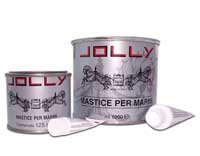
We use all of these fillers, and they do an excellent job of filling holes. However, they are best used by professional restorers because they are not simple to use. The resins have a strong smell, will require acetone to remove from skin, begin to set after around 5 minutes requiring multiple small batches, and leave a raised surface that must be ground smooth with a specialist machine costing over £200 or carefully scraped with a sharp blade — a process that can take 30 minutes per repair and risks scratching surrounding tiles.
If you are an enthusiastic DIYer these issues should be of little concern. For everyone else, sanded grout is the better choice.
When DIY Repair Is No Longer Enough
This repair kit is ideal for filling the odd hole that appears on your travertine floor. If your floor has become a honeycomb of hundreds of holes, DIY repair kits may not be sufficient to restore a uniform finish. Contact Abbey now for a professional restoration assessment — we can deep-clean and mechanically re-fill your entire floor for a factory finish.
This project is one of many examples referenced in our Travertine care and restoration guide, which explains how Travertine behaves in real homes and why problems develop over time.
Recent Posts:
We work throughout the country, just some of our work counties:
Copyright © 2025 Abbey Floor Care. Tile And Natural Stone Cleaning Consultants FAQ - Privacy Policy - Terms And Conditions
Abbey Floor Care is a participant in the Amazon Services LLC Associates Programme, an affiliate advertising programme designed to provide a means for websites to earn advertising fees by linking to Amazon.co.uk. As an Amazon Associate, we earn from qualifying purchases.