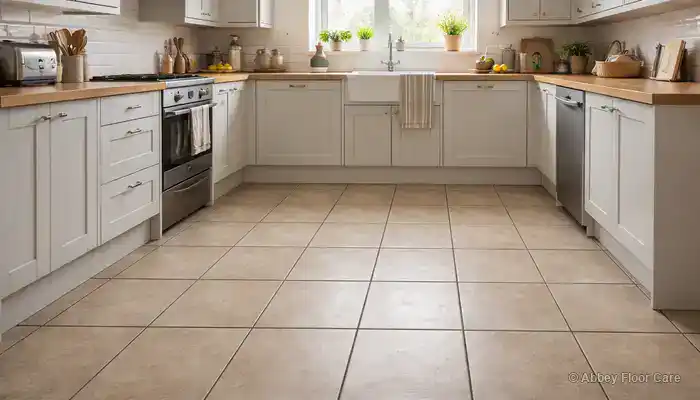
Why Ceramic and Porcelain Floors Often Look Dirty — Even When They’re Clean
Last Updated on February 5, 2026 by David
If you chose ceramic or porcelain tiles because they were meant to be durable, hygienic, and easy to live with, it can be frustrating when they never quite stay looking clean. You mop, you wipe, you’re careful — yet the floor still looks dull, streaky, or uneven, and the grout seems to let the whole room down.
That experience is far more common than most homeowners realise. It isn’t a sign that you chose badly or did something wrong. More often, it’s a sign that the floor isn’t behaving as expected.
Why ceramic and porcelain floors often disappoint over time
Ceramic and porcelain tiles are often described as “low maintenance”, but that phrase can be misleading. These floors don’t usually fail suddenly. Instead, their appearance becomes harder to manage over time, even as effort increases.
The frustration comes from a mismatch between expectation and reality. The tiles themselves are tough and non-absorbent, yet the floor as a whole starts to look dirtier more quickly, not cleaner. Marks show faster, grout darkens, and results become inconsistent. Over time, it can feel as though the floor is working against you.
This is part of the wider behaviour of ceramic and porcelain floors in real homes, where issues like residue, surface wear, and joint or grout changes often overlap.
If you’re worried that everyday cleaners might actually be making the finish look worse, this explains why that can happen.
The tile usually isn’t the problem
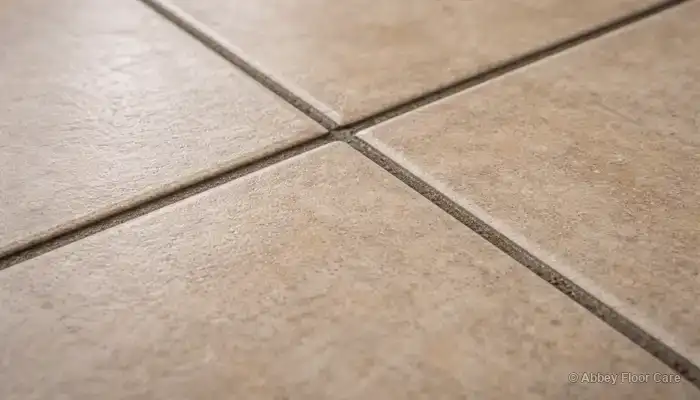
In most homes, the tile surface itself isn’t where problems begin. Ceramic and porcelain tiles are manufactured to be stable and resistant. They don’t soak up spills, and they rarely break down internally.
What changes is what sits on and between the tiles. Fine residues, cleaning films, and embedded dirt build up gradually. Grout behaves very differently from tile, and surface texture plays a bigger role than many people expect. When the floor looks worse over time, it’s easy to blame the tile — but the cause is usually elsewhere. This is part of the wider behaviour of ceramic and porcelain floors in real homes, where issues like residue, grout darkening, and surface texture often overlap.
If you’re unsure whether what you’re seeing is dirt or residue from cleaning, this helps explain why floors change.
Ceramic and porcelain don’t behave the same way
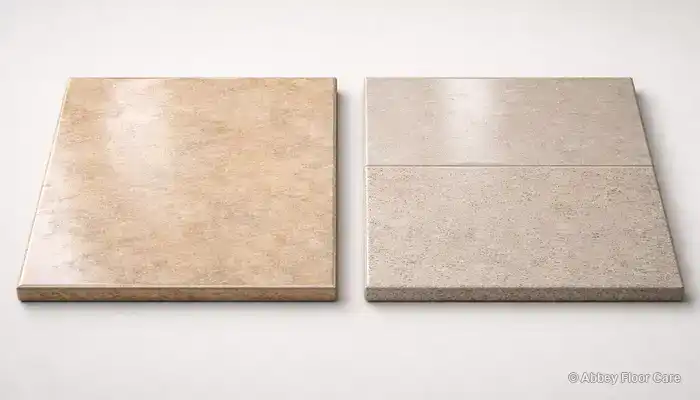
Ceramic and porcelain are often grouped together, but they don’t age in the same way. Ceramic tiles usually have a factory-applied glaze, even when the surface looks matt. Porcelain tiles are denser overall, but their behaviour depends heavily on the finish.
Some porcelain tiles are smooth and forgiving. Others are textured or slightly porous at the surface, which means they hold onto dirt more easily. Polished porcelain can also lose clarity if films build up. These differences explain why two tiled floors can be cleaned the same way yet still look very different.
If you’ve wondered why porcelain feels different to other floors day to day, this shows how materials compare.
Why grout dominates how the whole floor looks
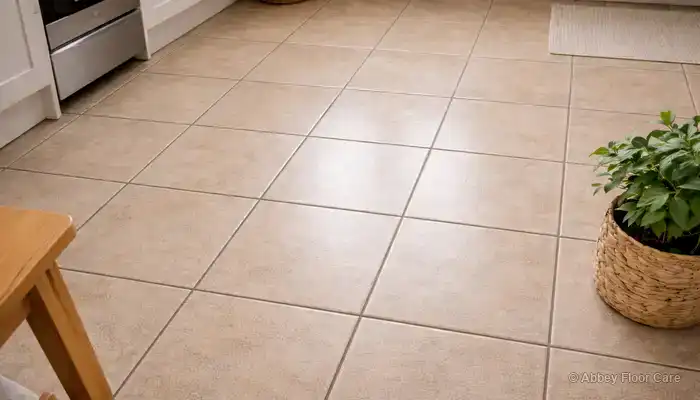
Grout has a far bigger impact on how a tiled floor looks than most people expect. Unlike ceramic and porcelain, grout is porous. It absorbs moisture, dirt, and residue, and it changes more quickly than the surrounding tiles.
As grout darkens or becomes patchy, it pulls the eye. Even clean tiles can look dull when grout lines are uneven or stained. This is why many people focus on cleaning the tiles but still feel disappointed with the result.
If you’ve been unsure what sealing actually applies to on a tiled floor, this explains what sealing affects.
When routine cleaning stops being enough
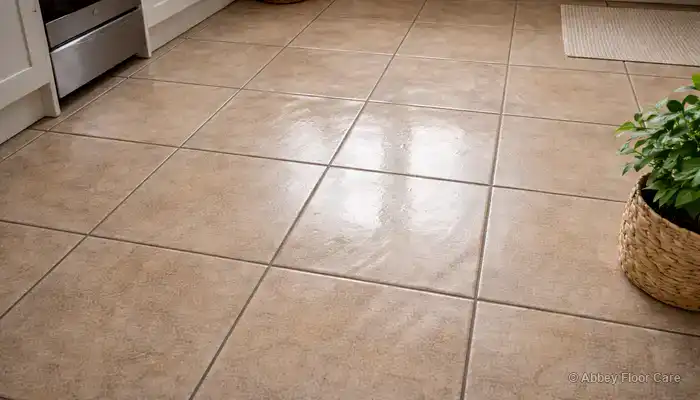
Routine cleaning works well when it removes what’s been recently left behind. Over time, though, thin layers can build up that don’t lift easily with mopping or wiping. Instead of being removed, they get spread around.
This is when floors start to look streaky, hazy, or slightly sticky underfoot. Cleaning more often or scrubbing harder rarely helps — and can sometimes make things worse.
If cleaning no longer makes a difference, this explains why that happens.
What “good” looks like for ceramic and porcelain floors
A floor that’s behaving properly tends to look even and predictable. The tiles clean without smearing, the grout colour stays consistent, and the surface doesn’t feel coated or tacky. Marks don’t immediately reappear.
These aren’t perfection standards — they’re signs that the floor is responding normally again.
If you’re unsure what ceramic tiles should realistically look like once they’re clean, this explains what’s achievable.
Where care, repair, and restoration differ
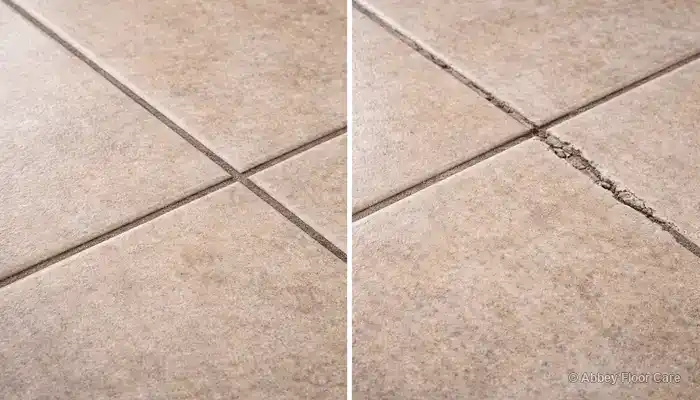
It’s common to blur everyday care, surface correction, and repair — but they address very different issues.
Care keeps a stable surface clean. Corrective work addresses what has accumulated over time. Repair fixes actual damage, such as failed grout or broken tiles. Knowing which situation you’re in helps avoid false expectations.
If you’re unsure whether your floor needs further cleaning or something more involved, this helps explain the difference.
What this article does — and doesn’t — cover
This page explains how ceramic and porcelain floors perform in real homes, why common frustrations arise, and where the limits of routine cleaning lie. It’s intended to make other information easier to understand when you come across it.
It deliberately avoids step-by-step cleaning advice, product recommendations, repair techniques, pricing, or service selection. Those topics are covered separately, where they can be handled properly.
If your next question is about whether certain cleaners are safe on porcelain finishes, this explains what to watch for.
A final thought
If your ceramic or porcelain floor has become increasingly difficult to live with, the problem is rarely effort or carelessness. More often, it’s a gap between how the floor was expected to behave and how it actually behaves over time.
We hope this page has helped make sense of what you’re seeing and why it happens. You don’t need to solve everything at once — just to feel clearer about what’s going on, and which questions are worth exploring next.
Recent Posts:
We work throughout the country, just some of our work counties:
Copyright © 2025 Abbey Floor Care. Tile And Natural Stone Cleaning Consultants FAQ - Privacy Policy - Terms And Conditions
Abbey Floor Care is a participant in the Amazon Services LLC Associates Programme, an affiliate advertising programme designed to provide a means for websites to earn advertising fees by linking to Amazon.co.uk. As an Amazon Associate, we earn from qualifying purchases.