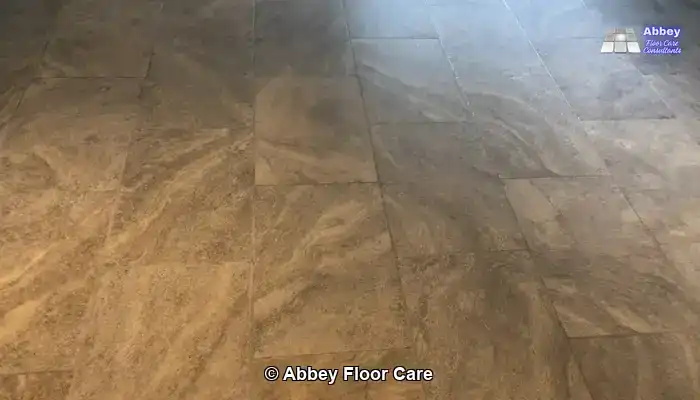
Cleaning and Sealing a Tumbled Travertine Floor in Hemel Hempstead (Case Study)
Last Updated on January 31, 2026 by David
Key Takeaways – Travertine Cleaning in Hemel Hempstead
- Tumbled travertine naturally develops pits, dull patches and dark grout lines as sealers wear and soil collects in its internal voids.
- Professional travertine cleaning in Hemel Hempstead uses stone-safe chemistry and wet vacuum extraction to pull ingrained soil out of pits and grout, not push it deeper in.
- Correct crack repairs and hole filling with resin and colour-matched grout stabilise the surface and remove deep dirt traps without stripping away all natural character.
- Gentle diamond honing refines scratches and wear, creating a smoother, calmer finish that suits busy kitchen and dining areas.
- A well-chosen sealing system, combined with the right daily cleaner, makes restored travertine easier to maintain and keeps it looking good for years.
If your tumbled travertine floor in Hemel Hempstead looks dull, patchy and full of dark pits, you are not alone. Travertine is a beautiful stone, but its natural holes and fragile surface mean that everyday cleaning can only do so much. This case study walks you through how we restored a tired, cracked and heavily soiled tumbled travertine floor so it looked clean, calm and easy to live with again.
Pro Tip: We recommend these products for daily Slate maintenance cleaning.
|
Fila Pro Floor Cleaner
|
LTP Floorshine
|
Vileda H2PrO Spin Mop System
|
Why This Tumbled Travertine Floor Needed Professional Help
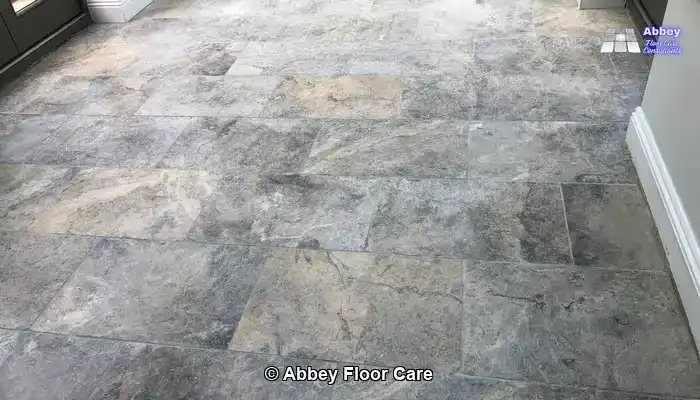
The homeowners in Hemel Hempstead were unhappy with the condition of their kitchen and dining area floors. The tumbled travertine had:
- Visible cracks where tiles had moved slightly over time.
- Scratches and light scuffing from day-to-day traffic and chair legs.
- Dark, ingrained soil trapped in the pits and along the grout lines.
- Open holes in the stone where the thin surface crust had broken away.
No matter how often they cleaned, the floor still looked dirty. This is typical of travertine. The stone is complete of tiny internal voids – once the original sealer wears away, these voids act like little dirt traps. Standard household cleaners and mops move dirty water around and push soil deeper into the stone.
The brief for this project was clear: carry out professional travertine cleaning in Hemel Hempstead, repair the damage, and leave the floor with an attractive, practical finish that would be easier to keep clean.
Step 1 – Inspection, Protection and Travertine Cleaning Plan
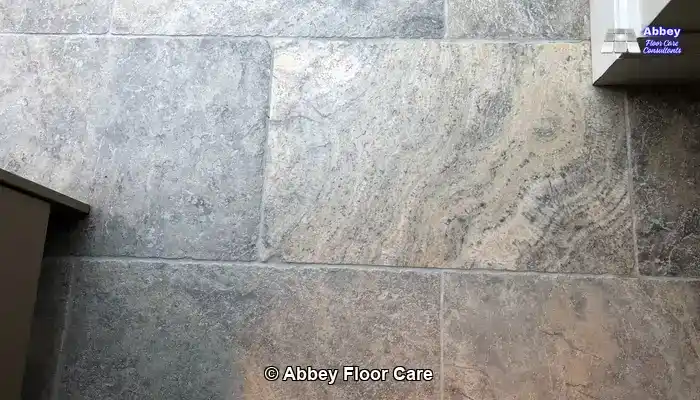
Every successful travertine restoration starts with a careful inspection. On this job, we checked:
- The condition of the stone surface – how many pits, how deep, how worn.
- The pattern and cause of the cracks – isolated hairline cracks versus movement across a wider area.
- Any signs of previous sealers or coatings that might need to be removed?
- Moisture levels in the floor, so we could plan drying time and sealing.
We then protected adjacent finishes with masking and sheeting.
Step 2 – Deep Cleaning to Remove Ingrained Soil and Old Residues
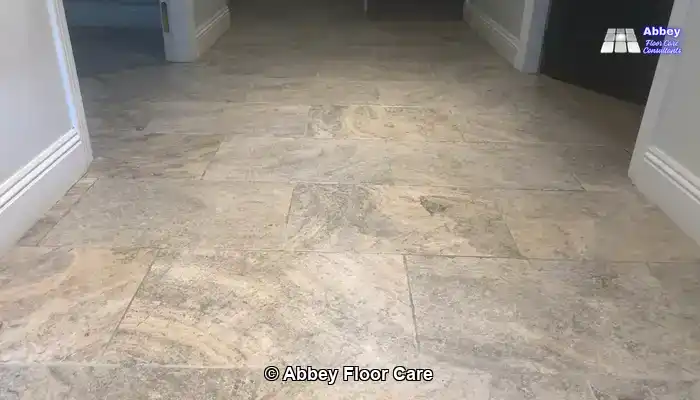
Because travertine is a calcium carbonate stone, we avoided acidic cleaners that could etch the surface. Instead, we used a carefully chosen high-alkaline cleaning solution designed for natural stone. This breaks down greasy soil and old cleaning residues without damaging the stone itself.
The cleaning process included:
- Applying the solution and allowing time for it to work into the pores and pits.
- Agitating with a low-speed rotary machine and specialist brushes to lift dirt out of the holes and grout lines.
- Rinsing with clean water and using a wet vacuum to extract the dirty slurry before it could settle back into the stone.
This “purge” stage is vital. Simply mopping or steam cleaning tumbled travertine in Hemel Hempstead will make the problem worse, forcing dirty water deeper into the stone. Professional slurry extraction gives us a clean, stable surface for repairs and honing.
Step 3 – Repairing Cracks, Holes and Weak Areas
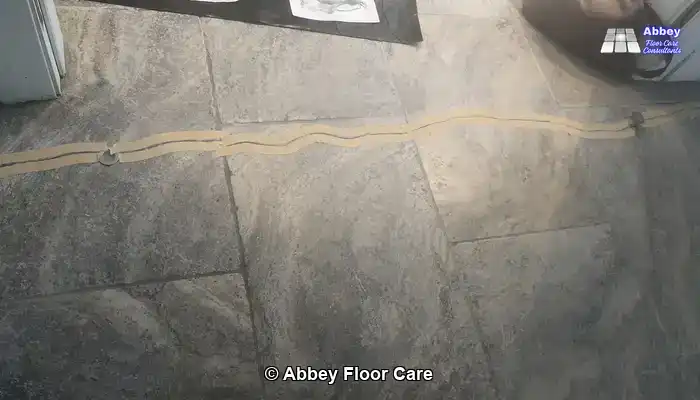
Once the floor was thoroughly cleaned, we could see the true extent of the damage. Several tiles had fine cracks, and there were multiple open holes where the original surface had broken away.
We carried out repairs in two stages:
- Crack repairs – we stabilised cracks with a high-quality, two-part resin. This helps prevent further movement and stops dirt from working into the crack line.
- Hole filling – after honing, we filled the open pits and holes, one tile at a time, using a carefully colour-matched cement grout. This gives a natural, sympathetic appearance that blends with the tumbled character of the stone while closing off deep dirt traps.
Because travertine has unpredictable internal voids, it is entirely normal for new pits to appear as we refine the surface. Our job is not to create a perfectly flat, “plastic” finish, but to stabilise the floor so it is visually calm, practical and easy to maintain.
Step 4 – Honing the Surface for a Smoother, More Even Finish
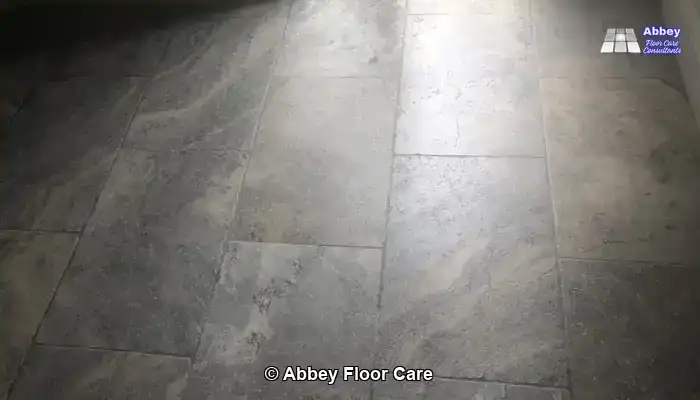
With the stone clean and the cracks stabilised, we used diamond honing pads to remove surface scratches and refine the tumbled travertine’s texture. Honing is a controlled mechanical process that gently smooths the stone without grinding away unnecessary material.
On this job, we:
- Started at a suitable grit level to remove scratches and light lippage.
- Worked through progressively finer grits to refine the surface and improve clarity.
- Paid particular attention to edges and awkward areas by hand so the finish remained consistent across the whole floor.
The aim was a natural, even sheen that suited the character of tumbled travertine – not a high-gloss marble-style polish, which rarely sits well on this type of stone.
Step 5 – Sealing the Tumbled Travertine for Easier Cleaning
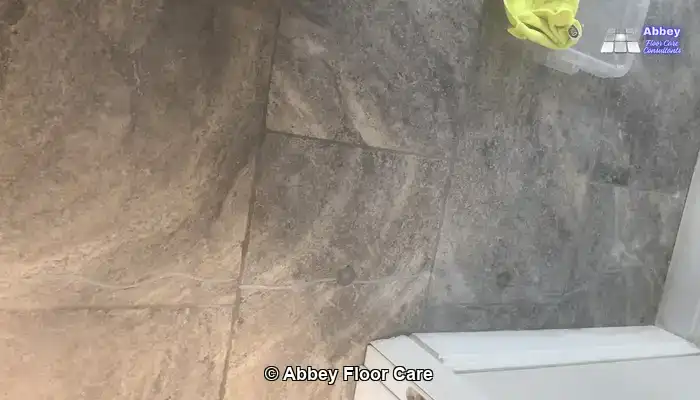
After honing and filling, we left the floor to dry overnight. Travertine holds moisture in its voids, so allowing proper drying time is essential for good sealer performance.
For this Hemel Hempstead travertine cleaning project, we applied two coats of a high-quality topical sealer. A topical sealer sits on the surface and creates a sacrificial wear layer that:
- Gives an attractive mid-sheen finish that suits many kitchens and open-plan spaces.
- Makes daily cleaning easier because soil sits on the protective layer rather than soaking straight into the stone.
- It can be renewed in the future without re-honing the whole floor, as long as it is maintained correctly.
We explained to the homeowner that, like all surface coatings, this type of sealer requires proper maintenance. The key is to clean with the correct detergent and avoid “mop and shine” products or cheap acrylic polishes that can build up, trap soil and spoil the appearance.
How to Look After Your Travertine Floor After Restoration
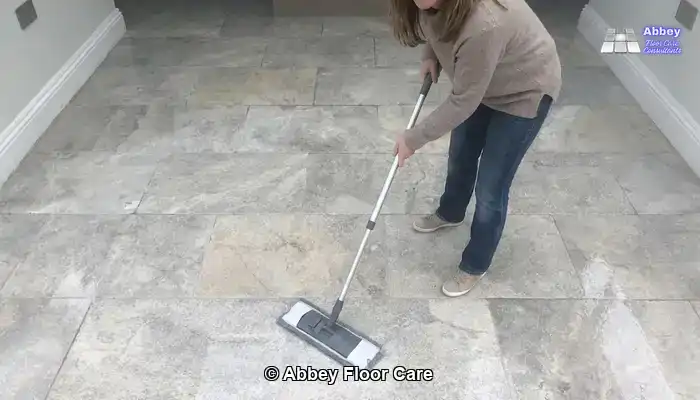
At the end of the project, we walked the homeowner through a simple care plan to keep the restored travertine looking good for as long as possible:
- Use a pH-neutral stone cleaner for regular mopping – no harsh supermarket chemicals.
- Use microfibre mops and change the water regularly, rather than pushing dirty water around.
- Vacuum or sweep grit from the surface before mopping to avoid unnecessary scratching.
- Place good-quality entrance mats at external doors to reduce tracked-in soil.
- Arrange periodic professional cleaning and sealer top-ups before the floor starts to look dull or patchy again.
With this approach, a professionally restored tumbled travertine floor in Hemel Hempstead should stay attractive, practical and easy to live with for many years.
Travertine Cleaning in Hemel Hempstead – Frequently Asked Questions
How often should a travertine floor be professionally cleaned?
It depends on traffic and how the floor is used, but most travertine floors benefit from professional cleaning and inspection every 2–4 years. Busy kitchens and open-plan areas in Hemel Hempstead homes may need more frequent attention, especially if there are pets, children or direct access from outside.
Will cleaning and sealing remove all the pits in my tumbled travertine?
Not necessarily. Tumbled travertine is designed to have a relaxed, textured appearance. We fill open, dirt-trapping holes to stabilise the surface and make the floor easier to clean, but we do not aim to remove every bit of natural character. Some shallow texture will usually remain after restoration.
Is a topical sealer always the best choice for travertine?
No. A topical sealer is one option, particularly where a mid-sheen finish is desired, and the floor needs extra protection. In other situations, a breathable impregnating sealer that sits within the stone rather than on top may be more appropriate. The right choice depends on the stone’s condition, location and how you want the floor to look.
Can you fix deep cracks in travertine tiles?
Hairline cracks and many deeper cracks can be stabilised with resin, filled and made far less noticeable. However, if a tile is severely cracked due to subfloor movement or installation issues, the long-term solution may be to replace that tile. We will always explain the options clearly before work begins.
Is professional travertine cleaning messy or disruptive?
We use controlled machinery, targeted cleaning solutions and wet vacuum extraction to keep the process as clean as possible. Surrounding areas are protected, and we plan the work so you can still access key parts of your home. Most travertine cleaning projects in Hemel Hempstead are completed in 1 to days, depending on the size and condition of the floor.
This project is one of many examples referenced in our Travertine flooring care guide, which explains how Travertine behaves in real homes and why particular issues develop over time.
About the Author – David Allen
David Allen is a Natural Stone and Tile Restoration Specialist with over 30 years of hands-on experience working in homes across the UK. He has restored hundreds of travertine floors in kitchens, hallways and open-plan living spaces, with a particular focus on addressing issues such as pitting, dullness, staining and failed sealers.
David’s day-to-day work covers deep cleaning, crack and hole repairs, diamond honing, and carefully matched sealing systems for travertine, marble, limestone, sandstone, terrazzo and Victorian tiles. His approach is calm, methodical and safety-led – always choosing stone-safe products and controlled machinery to protect each floor.
Through detailed case studies like this Hemel Hempstead project, David aims to give homeowners clear, practical guidance so they can understand what is happening to their stone, what can be achieved with professional restoration, and how to look after their floors for the long term.
Recent Posts:
We work throughout the country, just some of our work counties:
Copyright © 2025 Abbey Floor Care. Tile And Natural Stone Cleaning Consultants FAQ - Privacy Policy - Terms And Conditions
Abbey Floor Care is a participant in the Amazon Services LLC Associates Programme, an affiliate advertising programme designed to provide a means for websites to earn advertising fees by linking to Amazon.co.uk. As an Amazon Associate, we earn from qualifying purchases.