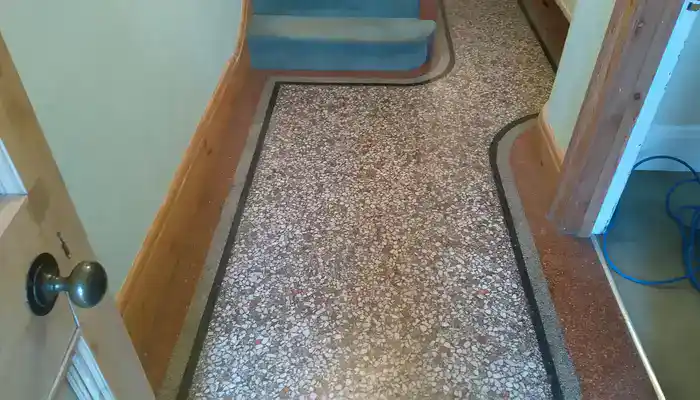
Terrazzo Floors in UK Homes: Care, Polishing & Restoration Explained
Last Updated on January 23, 2026 by David
Terrazzo floors are a familiar sight in many UK homes, particularly in period and mid-century properties. When they behave as expected, they feel solid, calm, and easy to live with. When they don’t, they tend to look dull in places, patchy in others, or simply never quite clean — no matter how careful you are.
If you’re unsure what your floor actually needs, that uncertainty is very common. Many homeowners sense that something has changed, but worry about making the wrong call or causing damage by trying to fix it. You don’t need to decide anything yet. This page exists to help you understand what you’re seeing, why terrazzo floors change over time, and how different types of care relate to different surface problems.
This guide explains what terrazzo is, why problems develop, and what kind of help makes sense at different stages — from everyday care through to more involved surface correction — so you can read on with confidence rather than guesswork.
Why terrazzo in UK homes behaves the way it does
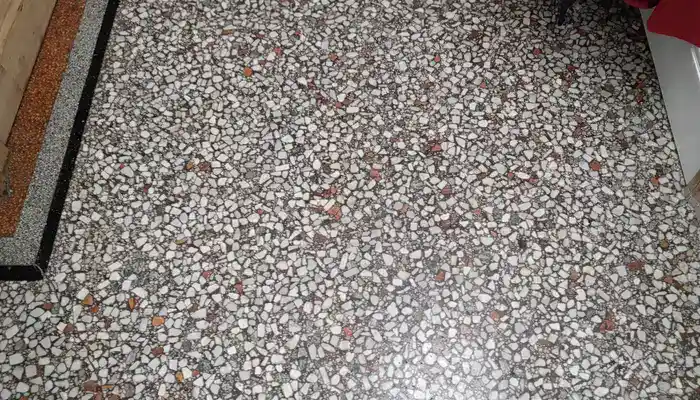
Traditional terrazzo uses decorative aggregates set into a cement base, which changes slowly as the floor ages.
Most terrazzo floors found in UK homes are made using a traditional cement base. Decorative pieces — usually marble, but sometimes granite, glass, shells, or other materials — are set into that cement and then ground smooth.
Over time, the cement matrix and the embedded aggregates respond differently to wear, moisture, cleaning products, and foot traffic. That difference in behaviour is why terrazzo can start to look uneven or tired even when it’s being looked after carefully.
If your interest in terrazzo is more about design than condition, you may find this helpful: Terrazzo flooring inspiration for UK homes.
Why terrazzo floors often lose clarity rather than just getting dirty
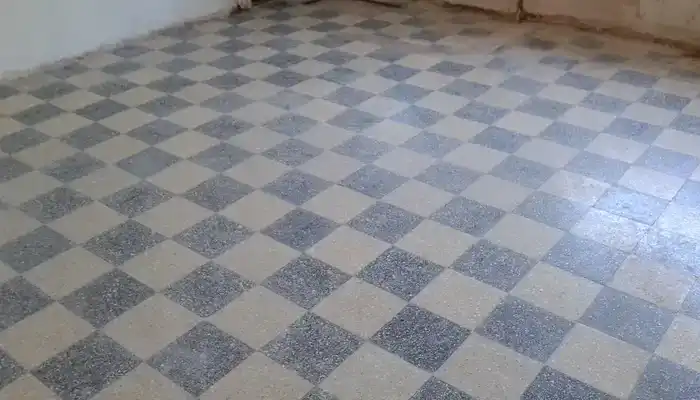
Wear patterns tend to show first in walkways and frequently used areas.
Homeowners often notice dull patches, darker walkways, stains appearing after carpets or vinyl are lifted, or small repairs becoming more visible with time. The surface may feel slightly uneven underfoot or look inconsistent depending on the light.
These changes are usually linked to surface wear, old residues, or changes within the cement layer itself rather than simple dirt. That’s why repeated cleaning sometimes improves things briefly but never quite restores the look you expect.
If you’d like a clearer explanation of the quieter, less obvious problems that affect terrazzo over time, this article explores them in detail: The hidden threats to terrazzo floors.
Why cleaning, polishing, and restoration lead to very different results
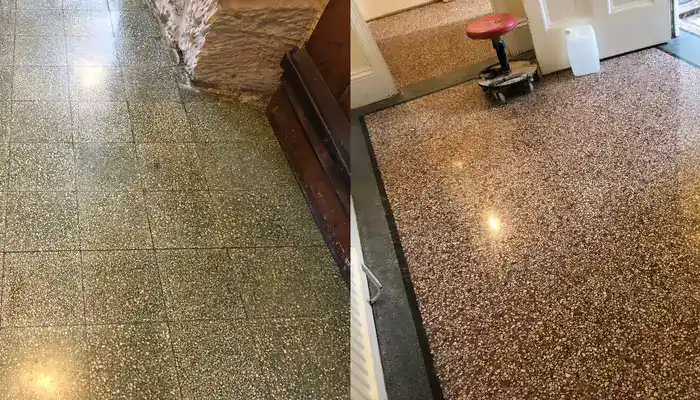
Each approach interacts with a different part of the surface.
Cleaning
Cleaning removes surface dirt and residues and is essential for everyday care. What it cannot do is correct wear, unevenness, or changes within the surface itself.
If you’re unsure whether shop-bought products are helping or quietly making things worse, this guide explains what’s safe and what to be cautious of: Is it safe to use off-the-shelf cleaners on terrazzo?
If you’re trying to choose a product and want realistic expectations, this article explains the limits of so-called “deep cleaning”: Choosing a terrazzo cleaning product.
Polishing (surface improvement)
Polishing can improve how light reflects from the surface, but the result depends heavily on the condition of the terrazzo beneath. In some cases it brings back clarity; in others it highlights uneven wear.
If you’re trying to understand what professional polishing can and can’t achieve, this homeowner guide sets expectations clearly: A homeowner’s guide to terrazzo polishing.
Restoration (correcting the surface)
Restoration focuses on correcting the worn surface itself so the floor can be levelled, repaired, and refinished in a stable, predictable way.
If you’re unsure whether polishing is enough or whether more involved work is needed, this explanation helps clarify what actually changes: Grinding vs polishing: what actually changes.
Why common terrazzo advice often leads to disappointment
Terrazzo is frequently misunderstood, which is why well-intended advice can fall flat.
- “It just needs a really good clean.” Cleaning helps with hygiene and appearance, but it can’t reverse surface wear.
- “If it’s shiny, it must be fixed.” Shine alone doesn’t mean the surface has been corrected or stabilised.
- “Sealing solves everything.” Sealers manage absorption, not wear or unevenness.
If you’re weighing up waxes versus sealers, this guide explains what’s appropriate for terrazzo and why: Wax vs sealant for terrazzo floors.
Why terrazzo finishes can look very different from one home to another
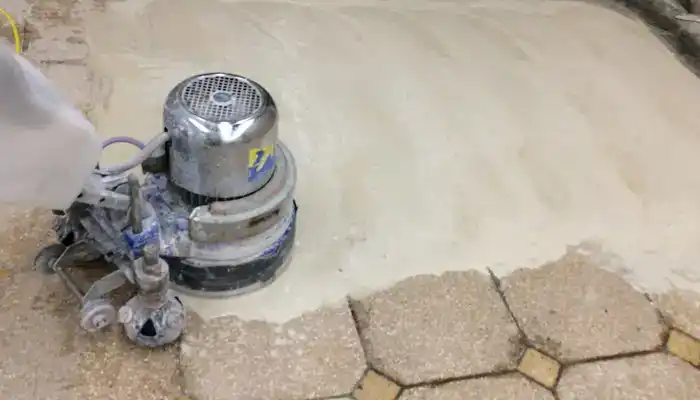
Clarity comes from surface preparation, not just shine.
Common finishes include:
- Matt / honed
- Satin
- Polished
If your main concern is simply “getting the shine back”, this article explains what’s realistic and why results vary: Restoring shine to terrazzo floors.
Why seeing real terrazzo floors helps things make sense
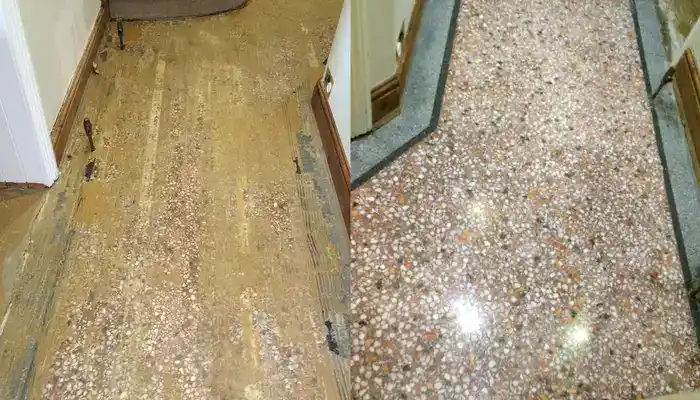
Real projects show what correction actually changes.
Real examples often clarify what explanations alone can’t. These projects show common terrazzo problems and how they were approached:
- Hidden terrazzo floor restored after lifting coverings
- Terrazzo hallway polishing and repair
- Terrazzo floor repairs and resurfacing
- Older terrazzo floor restored in one day
What this page is here to help you understand
This page acts as the central terrazzo guide for UK homeowners. It’s designed to explain why terrazzo behaves the way it does, why certain problems persist, and how different types of care relate to different surface conditions.
You can use the links above to explore the areas that matter most to you — whether that’s keeping terrazzo clean safely, understanding polishing results, deciding whether restoration is needed, or seeing real examples of similar floors.
About the author: David Allen has spent more than 25 years working with terrazzo and other traditional floor finishes in UK homes, focusing on careful assessment, clear explanation, and long-term behaviour rather than short-term cosmetic fixes.
If you’d like professional guidance on your own floor, you can arrange a terrazzo assessment and get advice based on what the surface is actually doing, not assumptions.
Recent Posts:
We work throughout the country, just some of our work counties:
Copyright © 2025 Abbey Floor Care. Tile And Natural Stone Cleaning Consultants FAQ - Privacy Policy - Terms And Conditions
Abbey Floor Care is a participant in the Amazon Services LLC Associates Programme, an affiliate advertising programme designed to provide a means for websites to earn advertising fees by linking to Amazon.co.uk. As an Amazon Associate, we earn from qualifying purchases.