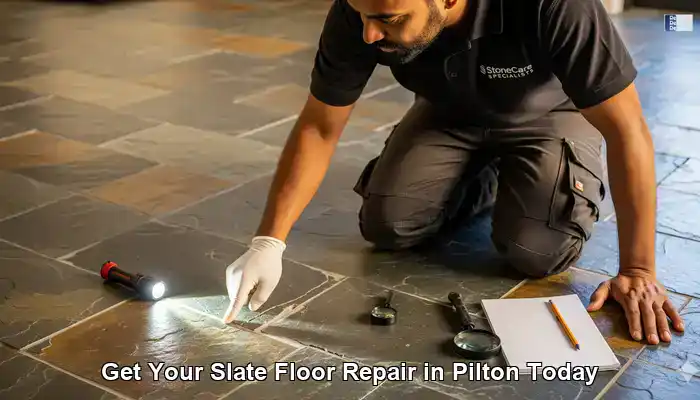
Dont Delay, Get Your Slate Floor Repair in Pilton Today
Last Updated on January 30, 2026 by David
If you’ve reached the point where your slate no longer feels “simple”, you’re not imagining it. A crack that wasn’t there before. A patch that stays dull no matter how carefully you clean. Grout lines that look permanently dark. It can start to feel like the floor is slipping out of your control — even though you’re doing your best.
🔍 Key Points Summary for Skim Readers
- Slate floors can appear “worn” for reasons that cleaning cannot address—especially once the surface has abraded or old coatings begin to fail.
- Cracks, flaking, loose edges, and recessed grout are usually signs of damage to the floor itself, not just dirt on top.
- Repair is about stabilising the changes, so the floor behaves more predictably again.
- Patchiness often results from a combination of wear, texture, and uneven protection over time—not neglect.
When slate repairs become the “real” issue, not cleaning
Slate is durable, but it isn’t immune to gradual wear, moisture movement, and coating breakdown. The tricky part is that slate problems often look like dirt, right up until the moment they don’t. Once cracking, flaking, or persistent patchiness appear, the frustration is usually less about cleaning and more about the floor no longer performing as it used to.
Why cracks and chips feel worrying on slate floors
A small crack can be easy to dismiss — until it grows, catches the light, or starts to collect dirt that never quite washes out. On slate, cracks and edge damage can also make the floor feel less stable underfoot, even if the issue is limited to one area.
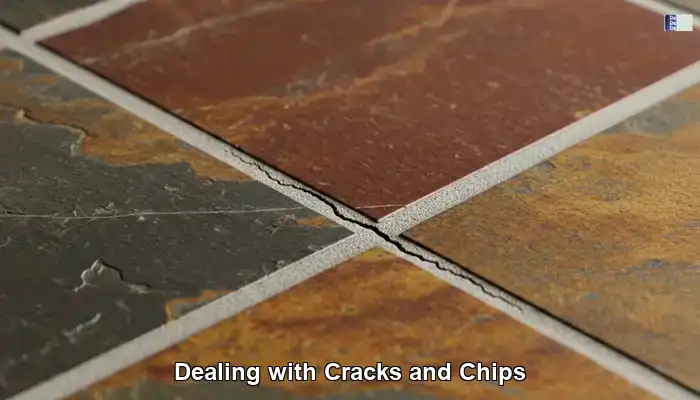
Cracks and chipped edges often appear worse over time because they attract dirt and draw the eye, even when the rest of the floor is cleaned carefully.
If cracks, loose edges, or unstable tiles are your main concern, see this page or contact us for advice.
Why slate can start to flake or shed thin layers
When slate begins to flake, it can feel like the surface is “coming away”. This is often most noticeable in traffic lanes, doorways, or places where moisture and wear combine. The result is rarely neat: you may see uneven texture, rough-feeling areas, or patches that seem to change faster than the rest of the floor.
Why grout lines can look permanently dark or recessed
On many slate floors, the grout is the first to look tired. Because grout is porous, it can darken from contaminated wash water over time, and it can also wear down so joints look slightly recessed. That combination can make an otherwise decent-looking slate floor feel older and harder to keep “looking clean”.
Why a slate floor can stay dull or patchy even after careful cleaning
Patchiness is one of the most frustrating slate problems because it doesn’t behave like normal dirt. You clean the surface and let it dry, but the same areas still appear pale, tired, or uneven. That often happens when the surface has worn, old coatings have begun to fail, or protection has been uneven across the floor for an extended period.
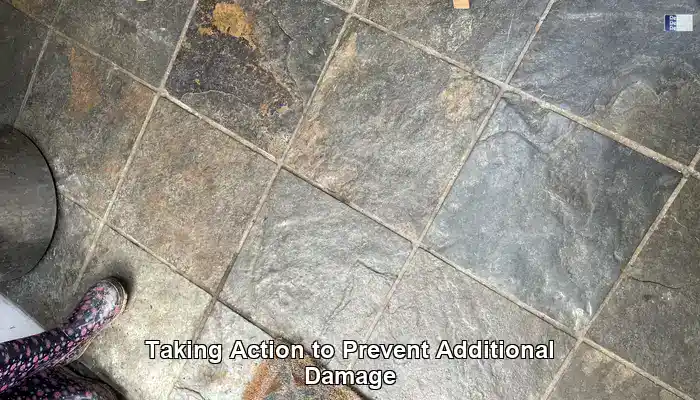
When slate starts to look uneven in both texture and colour, it often stops responding in a “normal” way to routine cleaning.
If the surface remains dull or patchy despite careful cleaning,please see this page or contact us for advice.
Why slate colour can look faded, uneven, or unpredictable
Colour changes on slate can be surprisingly emotional, because the floor still looks “clean” — it just doesn’t look like your slate anymore. Some areas go pale or chalky, some stay dark, and some look patchy depending on the light. That pattern is often linked to wear, texture, and how the floor has been protected over time, rather than what you’ve cleaned it with recently.
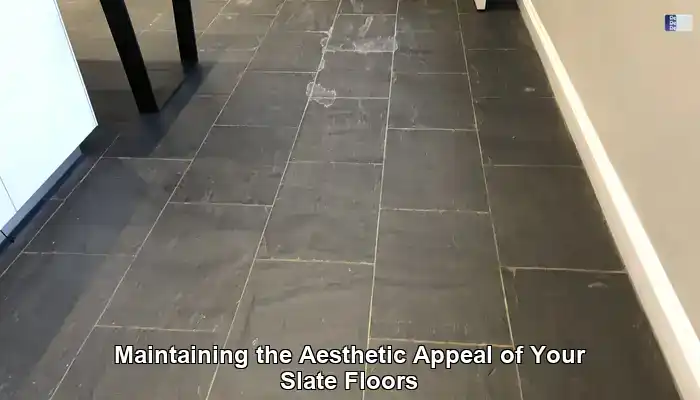
Uneven colour is often a sign that the slate has worn or been protected unevenly, rather than a sign that you have “failed” at cleaning.
If colour appears faded, uneven, or unpredictable, see this page or contact us for advice.
What “repair” really means on a slate floor
Slate repair is rarely about making the floor look factory-new. More often, it’s about stabilising defects, restoring consistency where it’s possible, and helping the floor behave in a more predictable way again. That might mean cracks no longer draw the eye, grout no longer dominates the room, or the surface no longer looks “permanently tired” days after cleaning.
If this still doesn’t quite answer what you’re seeing
Some slate floors reach a point where the question isn’t just about one issue — a crack, a dull patch, or uneven colour — but about how the floor behaves overall. If you understand the symptoms but want a clearer, broader-picture explanation, you may find it helpful to read a broader overview of how slate changes over time in UK homes.
9 Hazel Avenue
Lenzie
Glasgow
G66 4RR
07533-873-476
Copyright © Abbey Floor Care.
We are proud to be your local stone floor cleaning, polishing, and restoration specialists for homes and commercial properties in Central Scotland.
With years of experience working with all types of stone floors, our friendly and professional stone floor cleaning services can’t be beaten on price or service.
FAQ - Privacy Policy - Terms And Conditions
Abbey Floor Care is a participant in the Amazon Services LLC Associates Programme, an affiliate advertising programme designed to provide a means for websites to earn advertising fees by linking to Amazon.co.uk. As an Amazon Associate, we earn from qualifying purchases.