Slate Floors in UK Homes: Care, Behaviour, Long-Term Considerations
Last Updated on January 23, 2026 by David
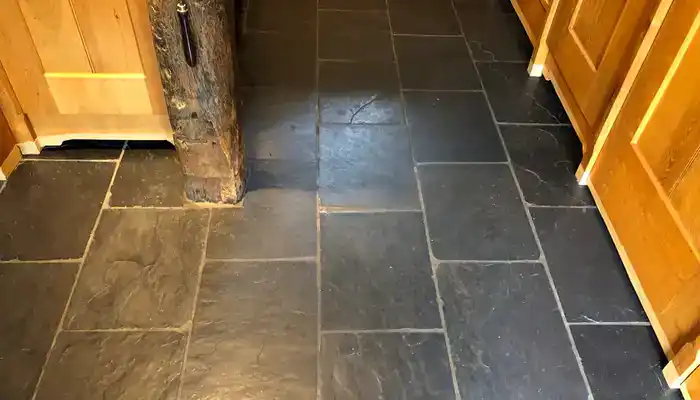
If your slate floor looks dull, patchy, or harder to clean than it used to — even though you’re careful with it — this page is for you. It looks at what slate is really like once it’s been lived on, why certain problems keep coming back, and why the stone itself often holds the answer.
Slate behaves very differently from manufactured flooring, and that difference explains a lot of the frustration homeowners feel. The way the stone wears, absorbs moisture, and responds to everyday use means that quick fixes rarely last. Once you understand how slate behaves over time, what you’re seeing on your floor starts to make sense — and it becomes clear that this isn’t just a cleaning problem.
Why a slate floor can start to look tired and uneven
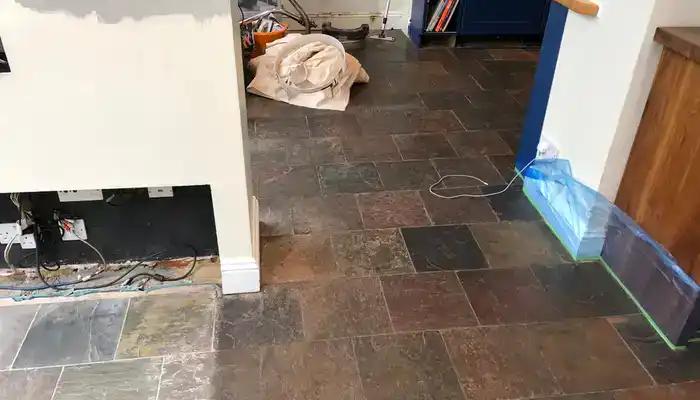
Most slate floors don’t suddenly fail — they gradually lose their good looks. The change often begins in the busiest areas of the room. Walkways start to look dull while the edges stay darker. Some tiles turn pale or chalky, while others seem to hold their colour, leaving the floor looking uneven and tired rather than uniformly worn.
On textured or riven slate, this can be especially frustrating. Dirt seems to cling to the surface, and even careful mopping doesn’t shift it. The floor still looks grubby, as though the dirt is trapped rather than sitting on top. Grout lines often darken at the same time, which makes the whole floor feel permanently dirty — no matter how much effort goes into cleaning. This uneven loss of colour and clarity is explored in more detail in why some slate floors fade while others stay vibrant.
Why a slate floor doesn’t wear evenly
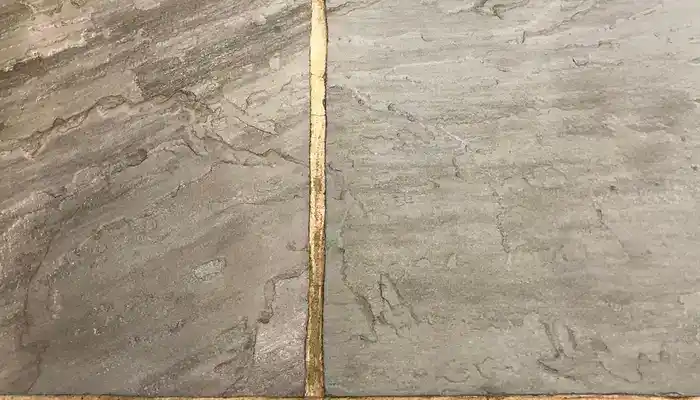
Slate is a natural stone made up of compressed layers. Those layers are what give it its depth of colour and textured feel, but they also explain why slate behaves so differently from manufactured flooring. Some areas absorb more moisture, some wear more quickly, and some hold on to dirt and old cleaning residues more easily — even within the same room.
On textured or riven slate, this effect is more pronounced because the surface isn’t flat. Tiny dips and ridges create places where fine soil and residues can settle, making the floor look dull or uneven long before the stone itself is actually worn out.
Over time, busy areas take the brunt of daily life. Foot traffic gradually softens and abrades the upper layer, while edges and sheltered spots keep more of their original colour. That’s why slate floors often develop light and dark areas rather than fading evenly. What you’re seeing isn’t neglect or poor cleaning — it’s the stone responding naturally to years of use.
Why your floor still looks dirty after it’s been cleaned
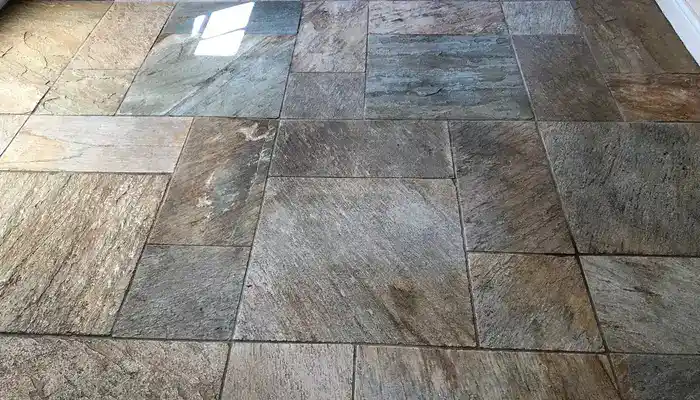
When a slate floor starts to look dull or patchy, most homeowners do exactly what feels sensible — they clean it more often or reach for something a little stronger. It’s especially frustrating when that extra effort barely helps, or when the floor looks tired again just a few days later.
The problem is that many slate issues aren’t sitting on the surface at all. Cleaning can lift loose dirt, but it can’t reverse surface wear, restore lost colour, or correct areas where the stone absorbs unevenly because older sealers have worn or broken down. That difference between routine cleaning and deeper underlying issues is explored further in why cleaning slate floors still matters — and where its limits are.
In many homes, residues from past cleaning products or old surface coatings are also part of the picture. These residues settle into the texture of the slate and break down unevenly over time, leaving some areas darker and others washed out. That’s why slate floors can feel as though they never truly come clean — no matter how careful or consistent the cleaning routine is.
Why sealing has such a strong influence on how your slate floor looks
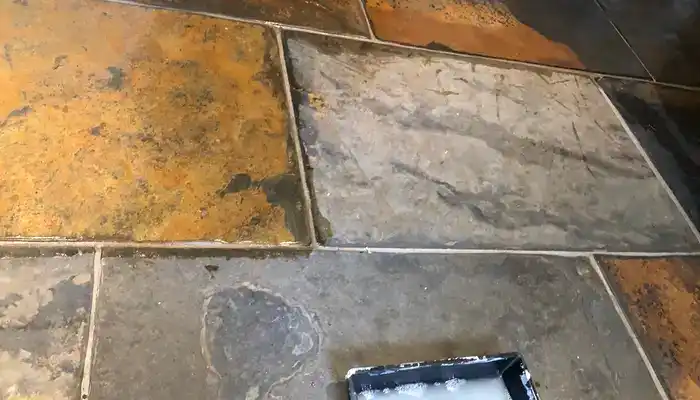
Slate is naturally porous, which means the way it looks day to day is closely tied to how the surface has been sealed — and how well that sealing has held up. When the sealing is appropriate and stable, colour tends to stay richer and the floor is generally easier to live with. When it isn’t, moisture and dirt can soak in unevenly, leading to patchiness, rapid re-soiling, or areas that appear cloudy or washed out.
This is why two slate floors can behave very differently, even when they’re cleaned in the same way. Sealing doesn’t change the stone itself, but it does affect how forgiving the surface is in everyday use. One finish that often raises questions is the so-called wet look, which is explained in more detail in achieving the signature wet look on natural slate flooring.
It’s also important to understand what sealing can and can’t do. Sealers won’t prevent scratches, stop wear, or undo damage that’s already present. What they do influence is how the slate ages, how evenly it wears, and how manageable it feels in day-to-day life.
Why slate floors often need more than one kind of care
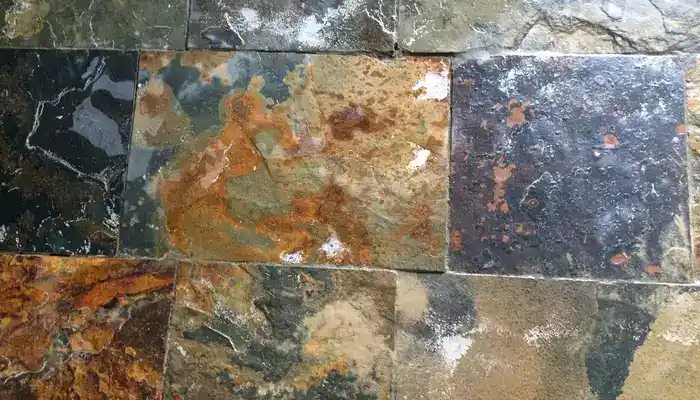
Slate floors aren’t looked after in just one way. Different problems need different kinds of attention, and much of the frustration homeowners experience comes from expecting a single approach to solve everything. Some care is about everyday living, while other work is about changes that happen within the stone itself over time.
Routine maintenance focuses on day-to-day cleanliness — keeping loose dirt, grit, and spills under control. Deeper cleaning deals with soil and residues that have worked their way into the surface and texture over the years. Repairs address physical issues such as cracks, flaking tiles, damaged grout, or old filler that has broken down. Refinishing may be needed where surface wear has dulled the slate, and sealing plays a role in protecting the surface and influencing how the floor looks once those underlying issues are properly dealt with.
Problems tend to arise when these categories are blurred. Trying to solve wear-related dullness through cleaning alone often leads to repeated disappointment. Likewise, sealing a floor that still has unresolved surface or structural issues can lock problems in rather than improve them. Broader restoration work is explained in professional slate floor restoration, while specific damage is explored in slate floor repair and decision-making is covered in repair versus replacement of slate tiles.
Why professional care can transform the look and feel of a slate floor
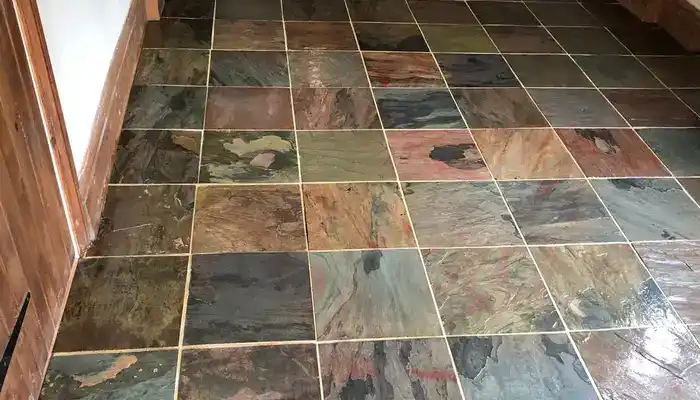
When the right issues are addressed in the right order, professional care can make a substantial difference to how a slate floor looks and feels. By removing built-up soils, residues, and failed surface coatings, the floor regains clarity, depth of colour, and a far more balanced appearance.
In many homes, that change goes beyond the floor itself. Rooms feel cleaner, calmer, and easier to live with, because the surface behaves more predictably again. When expectations are centred on restoring clarity, richness, and ease of day-to-day care, professional restoration is usually experienced as a genuine improvement rather than a compromise.
Elsewhere on this site, you’ll find pages that explore individual slate problems and finishes in more detail, building on the context explained here and, where helpful, showing real examples from previous projects.

Recent Posts:
We work throughout the country, just some of our work counties:
Copyright © 2025 Abbey Floor Care. Tile And Natural Stone Cleaning Consultants FAQ - Privacy Policy - Terms And Conditions
Abbey Floor Care is a participant in the Amazon Services LLC Associates Programme, an affiliate advertising programme designed to provide a means for websites to earn advertising fees by linking to Amazon.co.uk. As an Amazon Associate, we earn from qualifying purchases.