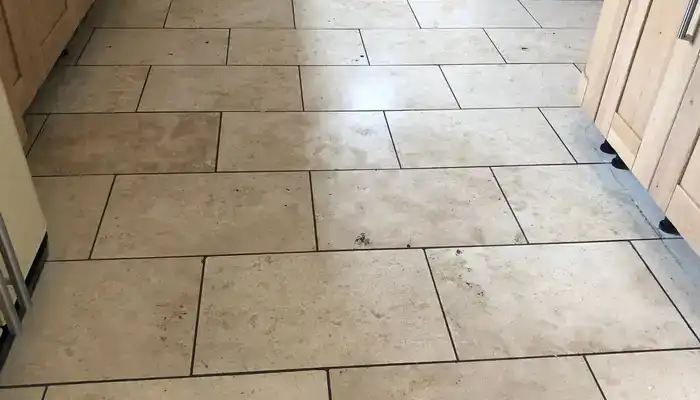
Travertine Flooring – Care, Cleaning, Repair and Restoration Explained
Last Updated on January 31, 2026 by David
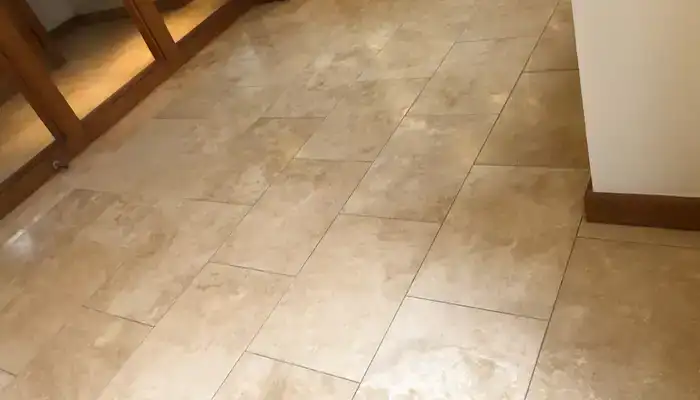
Travertine is a beautiful and characterful natural stone, but it behaves very differently from many homeowners expect. Its surface is naturally porous, full of tiny voids and channels formed during its creation. That structure is what gives Travertine its warmth and movement — and it’s also why it can develop issues that don’t respond to ordinary cleaning.
This page acts as the central guide to Travertine flooring on our website. It explains, at a high level, how Travertine behaves in real homes, the types of problems that commonly appear, and how professional care differs from routine cleaning. From here, you can explore more detailed guides or view real restoration projects where those issues have been resolved.
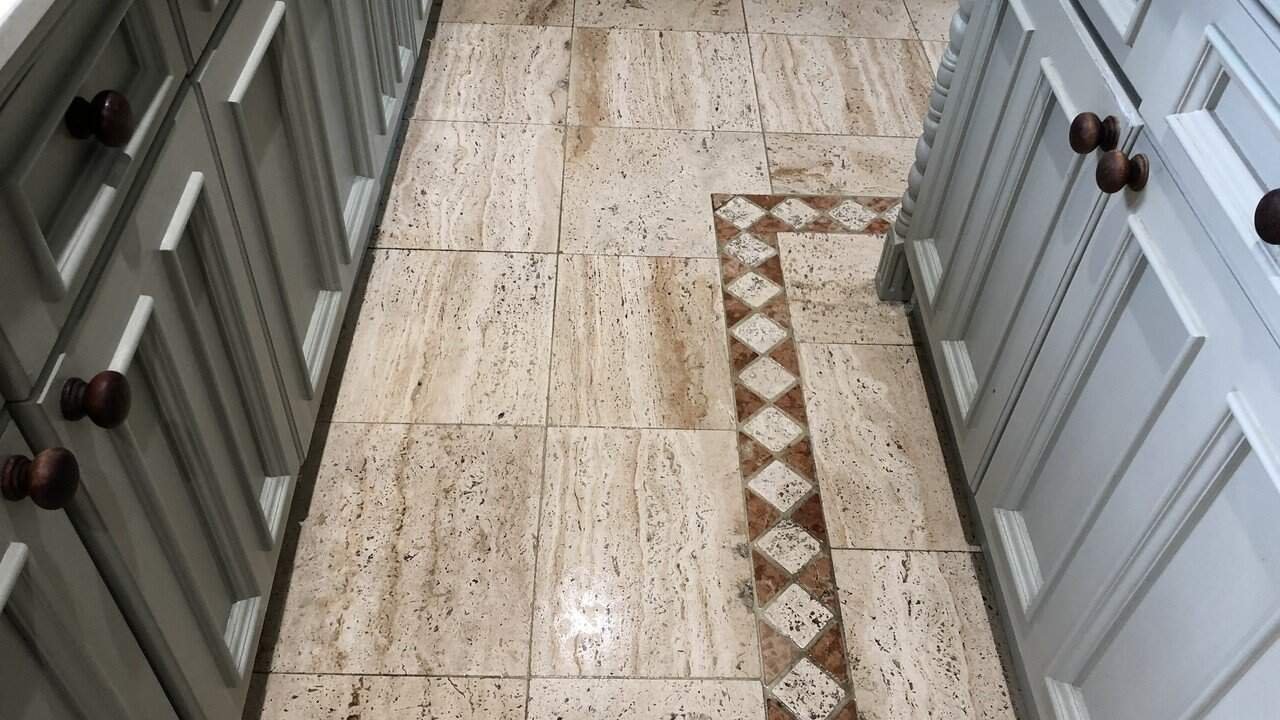
Understanding Travertine in everyday homes
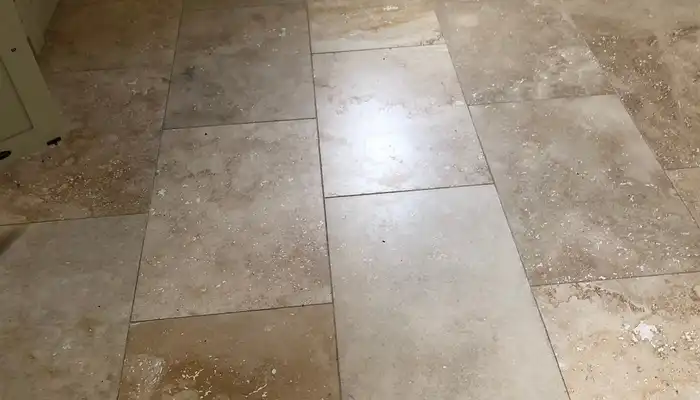
Travertine is a form of limestone. Unlike dense stones such as marble or porcelain-look tiles, Travertine contains natural pits and fissures that may be left open, partially filled, or fully filled depending on the finish chosen at installation.
In busy UK homes, this structure means:
- Soil can lodge below the surface, not just on it
- Liquids can darken the stone unevenly
- Wear often follows the stone’s natural grain rather than appearing randomly
Travertine floors rarely fail suddenly. Instead, they change gradually, becoming dull, patchy, or harder to keep clean over time.
Common Travertine problems we see
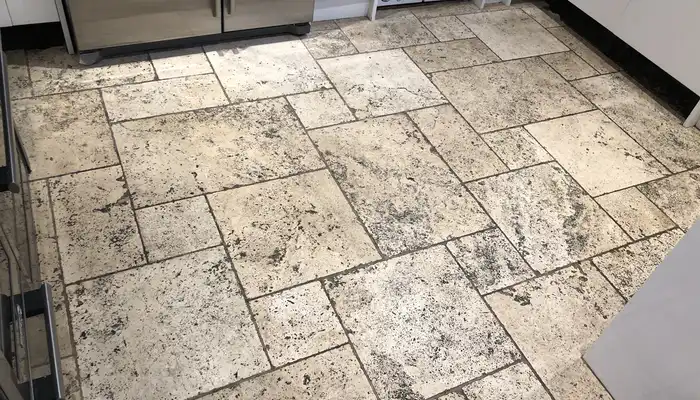
Most Travertine issues fall into a small number of predictable patterns. These are not faults in the stone — they are normal responses to use, cleaning methods, and surface treatments.
Typical problems include:
- Floors that look clean when wet but dull once dry
- Grout lines darkening or turning black
- Small holes reopening after previous filling
- Patchy appearance following sealing
- Etch marks caused by acidic spills
- Uneven wear in walkways and kitchens
Each of these symptoms has a specific cause, and each requires a different solution. Treating them all as “dirty floors” is where many homeowners run into trouble.
Cleaning vs restoration – why the difference matters
One of the most common points of confusion with Travertine is the difference between cleaning and restoration.
- Cleaning removes surface soil and residues
- Restoration corrects wear, surface damage, and structural issues within the stone
When Travertine becomes dull or blotchy, repeated cleaning often makes the floor worse rather than better. That’s because the underlying issue may be worn fillers, etched stone, or residues trapped below the surface.
Understanding where cleaning ends and restoration begins is key to protecting Travertine long-term. If you’re unsure which category your floor falls into, start with our guide to restoring a Travertine floor yourself, which explains what is realistic, what usually isn’t, and when expert help pays for itself.
Travertine repair and filling
Travertine often contains factory-applied fillers that wear away with use. Over time, this can expose voids beneath the original surface, leading to small holes and rough patches.
Proper repair involves:
- Matching fillers to the stone’s colour and finish
- Rebuilding the surface without opening new voids
- Refining the repair so it blends naturally with the surrounding tile
Quick fixes and hard epoxy fillers can create new problems later, especially when the floor is cleaned or refinished. If you’re dealing with small, cosmetic holes, see our step-by-step guide to Travertine tile repair. For larger areas of filler loss or widespread pitting, professional restoration usually gives a more stable long-term result.
Sealing Travertine – protection without problems
Sealing plays an important role in Travertine care, but it is also one of the most misunderstood aspects.
Different sealers behave very differently:
- Some protect without changing appearance
- Others alter sheen or deepen colour
- Incorrect products can cause streaking or patchiness
Sealing should always follow the condition of the stone. Applying a sealer to a worn or uneven surface often locks problems in rather than solving them.
If your floor has been sealed before and it’s now streaky or patchy, stripping the wrong way can permanently worsen it. For a safe, step-by-step explanation, see the safest way to strip old sealers off Travertine. If you’re choosing a sealer for long-term protection, our guide to the best Travertine sealers explains what different products do and where each one makes sense.
How to use this Travertine resource
This page is designed to help you navigate our Travertine knowledge, not to overwhelm you with detail.
From here you can:
- Read in-depth guides explaining specific Travertine problems and their causes
- Learn about professional cleaning, restoration, and repair processes
- View real Travertine case studies showing before-and-after results in UK homes
Each guide focuses on one topic at a time, so you can understand what applies to your floor without guesswork.
When professional advice helps
Travertine is a forgiving stone when treated correctly — and surprisingly easy to damage when it isn’t. If your floor no longer responds to normal cleaning, or if previous treatments haven’t worked as expected, it’s usually a sign that the issue lies below the surface.
Professional assessment helps determine:
- Whether cleaning is still appropriate
- Whether restoration is required
- What outcomes are realistic for your floor
Understanding this early often saves time, money, and frustration.
Explore Travertine guidance and case studies
Start here (guides)
- How to clean Travertine floor tiles (everyday care)
- How to get dirty tumbled Travertine clean again
- Can I restore a Travertine floor myself? (what’s realistic)
- Vein cut Travertine restoration (why it wears in lines)
Fix a specific problem
- Why Travertine grout turns black (and how to stop it)
- Safest way to strip old sealers off Travertine
- Travertine tile repair (filling holes properly)
Real Travertine restoration projects
- Travertine restoration in New Malden (KT3)
- Honed Travertine restoration in Chippenham (SN15)
- Travertine floor cleaned, filled and sealed in Edinburgh
- Tumbled Travertine deep cleaned in Hemel Hempstead (HP3)
- Tumbled Travertine restoration in Rhyl (LL18)
- Travertine repair and sealing in Chinnor (Oxfordshire)
A note on Travertine floors
Travertine ages differently from many modern flooring materials. With the right care, it develops character rather than deterioration. The key is understanding why it behaves the way it does and choosing solutions that work with the stone, not against it.
This hub exists to provide that understanding — clearly, calmly, and based on real experience.
Recent Posts:
We work throughout the country, just some of our work counties:
Copyright © 2025 Abbey Floor Care. Tile And Natural Stone Cleaning Consultants FAQ - Privacy Policy - Terms And Conditions
Abbey Floor Care is a participant in the Amazon Services LLC Associates Programme, an affiliate advertising programme designed to provide a means for websites to earn advertising fees by linking to Amazon.co.uk. As an Amazon Associate, we earn from qualifying purchases.